How to Source Mini Excavators for Your Equipment Business
Equipment businesses can source mini excavators by identifying suitable manufacturers, defining their target market, comparing complete quotations, and verifying product documentation and after-sales support. For importers, dealers, and equipment distributors, a reliable sourcing process helps control purchasing costs, maintain consistent product availability, and build a supply chain that supports long-term sales.
The goal is not simply to find the lowest-priced machine. Business buyers need suppliers that understand commercial order requirements, communicate clearly, provide accurate product information, and support repeat purchasing.
1. Define Your Target Market Before Contacting Manufacturers
Before requesting quotations, determine which customers your business intends to serve. A distributor supplying landscaping companies may have different product requirements from a dealer serving construction contractors or agricultural businesses.
Start by identifying:
The industries and customer groups you want to reach.
The types of projects customers commonly undertake.
The configurations and attachments customers request.
Your expected sales volume and purchasing frequency.
The price range your target market can support.
The service and parts support customers expect.
Use sales records, customer interviews, inquiries, and competitor research to validate demand. Avoid building a purchasing plan around assumptions that have not been tested.
A clear market profile helps you shortlist suppliers whose product ranges match your commercial objectives.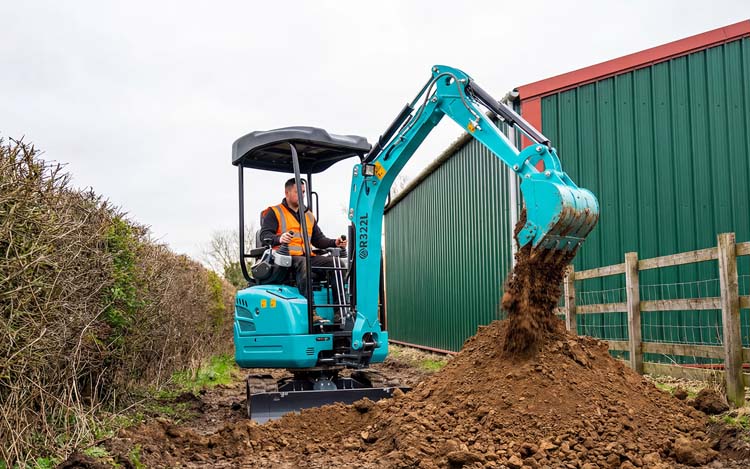
2. Identify Manufacturers and Wholesale Suppliers
Mini excavators can be sourced from manufacturers, export companies, authorized distributors, and other equipment suppliers. Each arrangement can have different implications for pricing, communication, order customization, and support.
When evaluating potential partners, ask whether the company manufactures the equipment or sources it from another business. Confirm the legal entity responsible for the contract, the origin of the equipment, and the party responsible for order fulfillment.
For manufacturers, review production capabilities, product range, inspection procedures, and documentation. For distributors or export suppliers, clarify their relationship with the manufacturer and how they handle product questions and parts requests.
Request a current catalog and specifications for the exact configurations under consideration. This makes it easier to compare offers on an equivalent basis.
3. Request a Complete B2B Quotation
A commercial quotation should contain enough information for your purchasing team to calculate costs and assess supplier suitability.
Ask each shortlisted supplier to provide:
Model and configuration details.
Unit pricing and applicable quantity conditions.
Minimum order quantity, if applicable.
Included attachments and accessories.
Spare-parts options, where available.
Payment terms and order confirmation procedures.
Production and shipment estimates.
Warranty conditions and exclusions.
Shipping terms and the named delivery point.
If you are comparing multiple suppliers, use the same specification sheet for each request. Otherwise, one quotation may include items that another supplier charges for separately.
Clarify whether prices are factory-gate, port-based, or delivered prices. A low unit price is not a meaningful advantage if the final cost or contractual terms are unclear.
4. Calculate the Full Cost of Sourcing
For imported mini excavators, the purchase price is only one part of the commercial calculation. Depending on the transaction, businesses may also need to account for freight, insurance, customs duties, brokerage, taxes, inland transportation, unloading, storage, and preparation for resale.
Calculate the estimated landed cost using the total relevant shipment expenses divided by the number of machines received. Keep one-time costs separate from recurring costs so that your team can compare future orders more accurately.
You should also consider the financial impact of inventory holding time. Equipment that remains unsold for longer than expected ties up working capital and may increase storage and financing expenses.
For planning purposes, prepare a base-cost estimate and a contingency scenario. Verify applicable import charges and regulatory requirements before finalizing the purchase.
5. Verify Product Documentation and Quality Processes
Business buyers should request documentation that matches the equipment being purchased. Relevant materials may include product specifications, operator manuals, parts information, inspection records, and applicable compliance documents.
Ask the supplier how completed machines are inspected before shipment and how any identified issues are handled. If quality inspections are part of your purchasing agreement, document the inspection scope, timing, and acceptance criteria in writing.
For equipment intended for the U.S. market, confirm the requirements applicable to the specific machine and configuration. Do not assume that a general export statement proves compliance with every U.S. requirement.
Accurate documentation also supports dealer operations by helping sales teams answer customer questions and identify the correct parts and accessories.
6. Evaluate Parts Support and Repeat-Order Reliability
A sourcing partner should be assessed not only on the first shipment but also on its ability to support future orders.
Ask how replacement parts are identified, whether parts lists are available, how technical questions are submitted, and how the supplier communicates availability. Confirm which components are stocked and which must be ordered.
For repeat purchasing, discuss how the supplier confirms configurations, manages order changes, communicates production milestones, and maintains records. Clear processes can reduce confusion when your business purchases several models or places orders throughout the year.
Do not promise customers specific parts delivery times unless those arrangements have been confirmed for your market.
7. Start with a Structured Supplier Evaluation
Before selecting a supplier, compare candidates using a consistent scorecard.
| Evaluation area | What to verify |
|---|---|
| Product fit | Match with target customers and applications |
| Business identity | Contracting company and supplier role |
| Pricing | Complete quotation and quantity conditions |
| Quality | Inspection procedures and available records |
| Documentation | Product manuals and applicable compliance documents |
| Logistics | Shipping terms and delivery responsibilities |
| Parts support | Parts identification and ordering process |
| Repeat orders | Communication and order-management procedures |
A supplier that meets your commercial requirements and provides clear documentation may be more valuable than a supplier offering a lower initial price but leaving major questions unresolved.
Frequently Asked Questions
Where can equipment businesses source mini excavators?
Businesses can source mini excavators directly from manufacturers or through export companies, distributors, and wholesale suppliers. The appropriate channel depends on order volume, purchasing requirements, supplier capabilities, and support expectations.
What should importers ask a mini excavator manufacturer?
Ask about product configurations, order quantities, pricing, quality checks, documentation, shipping arrangements, warranty terms, and replacement-parts support.
How can a business compare mini excavator suppliers?
Use a standardized specification sheet and request itemized quotations. Compare total landed costs, contractual terms, product documentation, logistics, and after-sales arrangements rather than unit price alone.
Why is repeat-order reliability important?
Reliable order communication and consistent documentation help businesses plan inventory, coordinate customer commitments, and reduce purchasing uncertainty as the business grows.
Conclusion
Sourcing mini excavators for a commercial operation requires a structured approach to market research, supplier verification, cost analysis, documentation, and support planning. Equipment businesses that evaluate these factors before ordering are better positioned to build a dependable supply chain.
Prepare a purchasing specification, request comparable quotations, and clarify commercial responsibilities before committing to an order. For businesses planning repeat purchases, these steps provide a practical foundation for a long-term supplier relationship.