Top Mini Excavator Price Guide 2026: Real Costs, Market Comparison & Buying Strategy
Mini excavator prices in 2026 vary significantly depending on brand, tonnage, engine configuration, hydraulic system, and country of origin. With the global construction equipment market becoming more competitive, buyers are no longer only comparing machine specifications—they are focusing on total ownership cost, return on investment (ROI), and long-term maintenance expenses.
Understanding the real market price structure is essential before purchasing. This guide breaks down the top mini excavator price segments in 2026, helping contractors, dealers, and buyers make smarter investment decisions.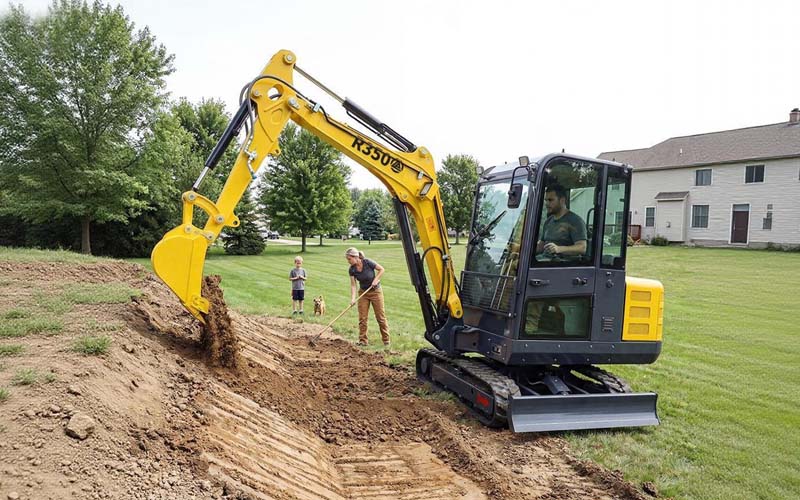
1. Entry-Level Mini Excavators (0.8–1.8 Ton)
💰 Price Range: $4,000 – $12,000
This segment is designed for light-duty applications and personal or small business use.
Key characteristics:
Simple hydraulic system
Lightweight structure for easy transport
Basic engine configuration
Limited attachment compatibility
Common applications:
Home gardening
Small landscaping projects
DIY land clearing
Light farming work
These machines are often purchased by individual users or small contractors who prioritize affordability over long-term heavy-duty performance.
2. Mid-Range Mini Excavators (2–3.5 Ton)
💰 Price Range: $12,000 – $25,000
This is the most popular and competitive segment globally, accounting for the largest market share.
Key characteristics:
Balanced power and fuel efficiency
Strong hydraulic performance
Multiple attachment compatibility
Suitable for continuous daily operation
Common applications:
Construction site excavation
Agricultural trenching and drainage
Municipal maintenance work
Landscaping and infrastructure repair
Example:
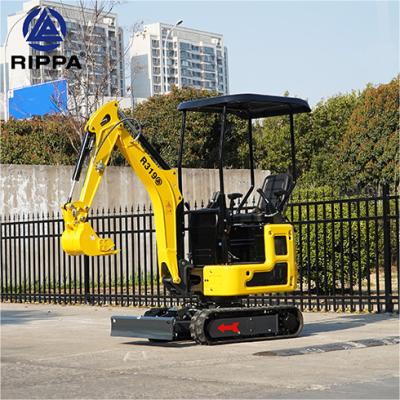
Rippa offers models like R15, R18, and R22, which are widely used in this category due to strong cost-performance ratio and export-friendly configurations.
3. Professional Grade Mini Excavators (4–6 Ton)
💰 Price Range: $25,000 – $45,000
This segment is designed for professional contractors and medium-scale construction companies.
Key characteristics:
Strong digging force and lifting capacity
Reinforced chassis and hydraulic system
Better stability in harsh environments
Higher efficiency for long-hour operation
Common applications:
Road construction projects
Infrastructure development
Heavy landscaping tasks
Utility installation work
Machines in this category offer a strong balance between power and mobility, making them suitable for commercial contractors.
4. Premium Brand Segment (Global Leaders)
Premium mini excavators from brands like Caterpillar and Kubota typically fall into a higher price category.
💰 Price Range: $30,000 – $60,000+
Key reasons for higher pricing:
Strong brand reputation and global recognition
Advanced hydraulic and electronic systems
Higher resale value in second-hand markets
Extensive global service and spare parts network
These machines are usually chosen by large contractors and companies that prioritize long-term reliability over initial cost.
5. Chinese Factory-Direct Advantage (High ROI Segment)
In recent years, Chinese manufacturers have become increasingly competitive in global markets due to factory-direct pricing and flexible customization.
Brands such as Rippa provide:
Lower factory pricing compared to dealer networks
Customizable configurations (engine, color, attachments)
Faster production and delivery cycles
Strong export certifications (CE, ISO, SGS)
This segment is especially attractive for dealers and distributors who focus on profit margin and fast market expansion.
Market Insight: Why Prices Differ So Much
Mini excavator pricing is influenced by several key factors:
1. Brand value
Well-known brands charge higher premiums due to reputation and resale value.
2. Engine type
Kubota, Yanmar, and Cummins engines increase machine cost significantly.
3. Hydraulic system quality
Advanced hydraulic systems improve efficiency but increase production cost.
4. Manufacturing origin
Japanese and American machines tend to be more expensive than Chinese machines due to labor and production costs.
Buying Strategy: How to Choose the Right Price Level
Instead of only focusing on the lowest price, buyers should consider:
Expected working hours per year
Job site conditions
Maintenance availability
Resale expectations
Dealer support and spare parts supply
For long-term investment, premium brands offer stability. For fast ROI and market entry, factory-direct machines such as Rippa provide stronger competitiveness.
Conclusion
The mini excavator market in 2026 is highly segmented. Entry-level machines are ideal for light use, mid-range models dominate the global market, and premium brands focus on engineering excellence. Meanwhile, Chinese manufacturers are rapidly expanding due to their strong price advantage and export capabilities.
Understanding these price tiers allows buyers to make smarter decisions and maximize return on investment.