Construction Equipment Pre-Delivery Inspection Checklist for Importers
Purchasing construction equipment from an overseas manufacturer involves more than confirming the price and delivery schedule. Before a machine is shipped, importers need to verify that the equipment matches the agreed order, its main components are correctly installed, its functions have been checked, and the required accessories and documents are prepared.
A structured construction equipment inspection checklist helps international buyers identify discrepancies before the machine leaves the factory. It also provides a clearer basis for communication between manufacturers, distributors and inspection personnel.
For equipment importers purchasing excavators, skid steer loaders, wheel loaders or other construction machinery, pre-delivery inspection should be treated as an important part of the purchasing process rather than a final formality.
1. Confirm the Machine Matches the Purchase Order
The first inspection step is to verify the identity and configuration of the actual machine.
Buyers should compare the completed equipment with the purchase order, quotation and approved configuration documents.
Check the following items:
Machine type and model.
Machine quantity.
Serial number or identification number, where assigned.
Engine information, where specified in the order.
Agreed machine configuration.
Ordered attachments and accessories.
Optional equipment included in the purchase agreement.
For example, if a dealer orders several excavators with different configurations, each machine should be checked individually. A general statement that the order is complete is not a substitute for verifying every unit.
Any substitution or configuration change should be documented and approved by the buyer before shipment.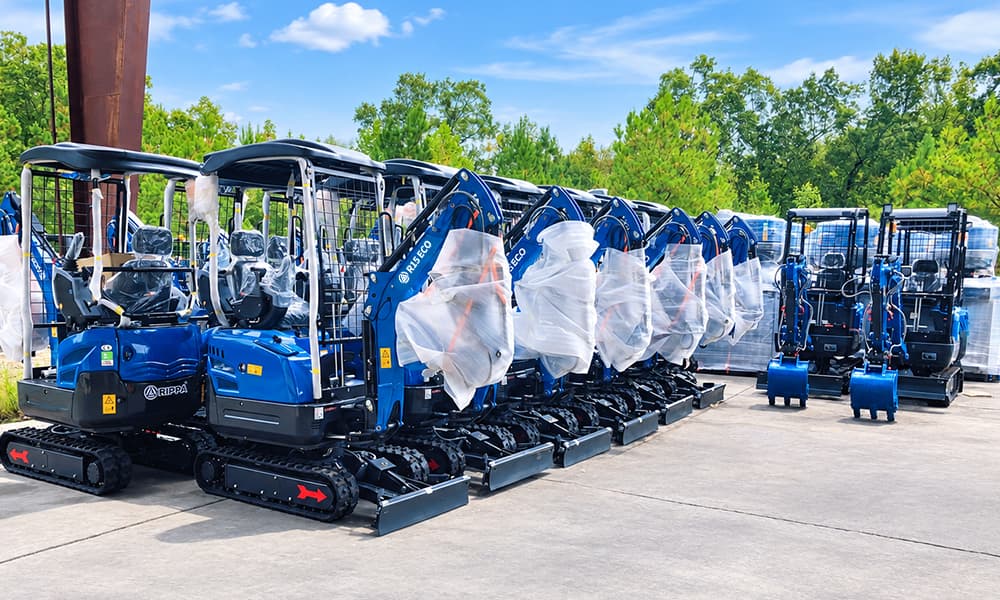
2. Inspect the Machine's Overall Appearance and Structure
A visual inspection helps identify visible damage, incomplete assembly and workmanship issues.
The inspection should cover the main machine structure and accessible external components.
Main Structure
Check the frame, body panels, protective covers and accessible structural connections.
Look for:
Visible cracks or deformation.
Damaged or missing covers.
Loose external components.
Incomplete assembly.
Visible welding or finishing concerns.
Paint and Surface Condition
Review the paint finish and exposed surfaces for scratches, corrosion, peeling or damage.
Pay particular attention to areas that may have been affected during manufacturing, handling or internal transportation.
Fasteners and Connections
Check accessible bolts, nuts, brackets and mounting points for visible looseness or missing components.
Critical fasteners should be checked according to the manufacturer's specified inspection and tightening procedures rather than judged by appearance alone.
3. Check the Main Mechanical and Hydraulic Components
Construction machinery depends on several interconnected systems. A pre-delivery inspection should verify that the relevant components are present, properly connected and free from obvious defects.
Engine and Related Components
Where the equipment includes an engine, check:
Engine identification information.
Visible condition of the engine compartment.
Accessible hoses and connections.
Oil or fluid leakage.
Battery mounting and cable connections.
Relevant warning indicators during the agreed operating test.
The engine should be operated according to the manufacturer's instructions by qualified personnel.
Hydraulic System
For hydraulic construction equipment, inspect accessible hydraulic hoses, fittings, cylinders and connections.
Look for:
Visible oil leakage.
Damaged hoses.
Loose fittings.
Scratches or damage on exposed cylinder rods.
Abnormal movement during approved functional testing.
The hydraulic inspection should follow the equipment-specific safety procedures. Buyers should never attempt to inspect pressurized hydraulic connections by hand.
Electrical System
Check the condition of accessible wiring, connectors, switches, lights and control components.
Verify that the electrical functions included in the purchase configuration operate as expected during the agreed test.
4. Perform an Operational and Functional Test
A machine can appear complete while still having functional problems. For this reason, an operational inspection is an important part of pre-delivery quality verification.
The test scope should be agreed before inspection and adapted to the equipment type.
Equipment Category | Suggested Inspection Areas |
|---|---|
Excavator | Starting, control functions, boom and arm movement, bucket operation, swing and travel |
Skid steer loader | Starting, steering, travel, loader arm movement and attachment functions |
Wheel loader | Starting, steering, braking, travel and bucket movement |
Backhoe loader | Front loader functions, rear digging functions, steering and travel |
During testing, inspectors should pay attention to abnormal noises, unusual vibration, warning lights, fluid leakage and inconsistent machine responses.
Testing should be conducted in a suitable area by trained operators.
Not every function can be verified under every inspection condition. If a load test, specialized test equipment or additional technical assessment is required, its scope and acceptance criteria should be agreed with the manufacturer in advance.
5. Verify Attachments, Accessories and Spare Parts
Missing accessories can create unnecessary problems after the equipment reaches the destination country.
Importers should compare the physical shipment contents with the agreed order and packing list.
Depending on the purchase agreement, the inspection may include:
Standard buckets or other ordered attachments.
Hydraulic accessories.
Tool kits.
Filters and maintenance items.
Agreed spare parts.
Keys and operating accessories.
Separate component packages.
Each item should be counted and identified.
For orders involving multiple machines, it is useful to create a separate accessory list for each unit. This reduces the risk of mixing components between machines or overlooking items packed separately.
Do not assume that an accessory is included simply because it appears in a product photograph or online listing. The purchase agreement should determine what is supplied.
6. Review Product Documents and Export Information
Documentation is another essential part of construction equipment inspection.
Before shipment, buyers should confirm that the available documents match the actual equipment and the agreed transaction.
Document or Record | What Buyers Should Verify |
|---|---|
Commercial Invoice | Buyer, seller, product description and transaction details |
Packing List | Machine quantity, package contents and shipment details |
Sales Contract | Agreed equipment configuration and commercial terms |
Product Manual | Correct machine model and applicable instructions |
Inspection Report | Inspection scope, findings and test results |
Identification Information | Model and serial number where applicable |
Compliance Documents | Documents applicable to the equipment and destination market |
Import requirements differ between countries and machine categories. Buyers should confirm destination-specific requirements with the relevant customs authorities or qualified import professionals.
A generic document checklist cannot replace local regulatory verification.
7. Check Export Packaging and Shipment Preparation
Once the equipment passes the agreed inspection, buyers should also review how it will be prepared for international transportation.
Poor packaging or inadequate protection can expose equipment to damage during handling and transit.
Packaging Inspection
Check whether:
Exposed components have appropriate protection.
Loose accessories are secured.
Sensitive parts are protected against moisture and impact where necessary.
Machine identification marks remain readable.
Separate packages are properly identified.
Packing List Verification
Compare the actual machines and packages with the packing list.
Confirm the quantity, package identification and relevant dimensions and weights recorded in the shipping documents.
For container shipments, transportation arrangements and securing methods should follow the approved loading plan and applicable safety requirements.
8. Record Inspection Results and Resolve Problems Before Shipment
An inspection is only useful when its findings are clearly recorded.
Importers should request an inspection report containing:
Machine identification.
Inspection date and location.
Items checked.
Functional test results.
Photographs of relevant components.
Identified defects or missing items.
Corrective actions.
Reinspection results, where applicable.
When a problem is identified, it should be documented in a written corrective-action list.
Each issue should have a clear description, responsible party and expected resolution date.
For example, if an ordered attachment is missing, the buyer should request confirmation of whether it will be supplied separately or included before shipment.
Critical discrepancies should be resolved according to the agreed acceptance criteria and contractual terms before shipment authorization.
9. Why Pre-Delivery Inspection Matters to International Equipment Dealers
For overseas distributors and wholesalers, equipment quality verification is closely connected to customer satisfaction and business reputation.
A dealer may purchase multiple machines in one order and distribute them to different customers. If the wrong configuration, missing accessories or incomplete documentation is discovered after arrival, resolving the problem can become more complicated.
A consistent inspection process helps dealers:
Reduce avoidable order discrepancies.
Verify equipment configuration before shipment.
Maintain clearer supplier communication.
Organize records for customer delivery.
Improve purchasing and inventory management.
Establish more transparent quality expectations.
For manufacturers and suppliers, a documented inspection process also provides a clearer understanding of buyer expectations.
Frequently Asked Questions
1. What is included in a construction equipment inspection checklist?
A typical checklist covers machine identity, configuration, external condition, mechanical and hydraulic components, electrical functions, operational testing, accessories, documents and export packaging.
2. When should construction equipment be inspected before delivery?
The main inspection should take place after the machine is sufficiently assembled and the manufacturer's internal checks are complete, but before final packing and shipment authorization.
3. Should importers arrange third-party machinery inspections?
For larger orders or purchases involving significant commercial risk, an independent inspection can provide additional verification. Buyers should define the inspection scope and acceptance criteria before arranging the service.
4. What should buyers do if inspection identifies a problem?
Record the issue with photographs and a written description. Agree on corrective actions with the supplier, verify the correction and follow the acceptance and shipment-release terms in the contract.
5. Is a pre-shipment inspection the same as a delivery inspection?
No. A pre-shipment inspection checks the equipment before it leaves the supplier or factory. A delivery inspection takes place after transportation to verify the condition and completeness of the received equipment.
6. Do all construction machines require the same inspection checklist?
No. The general inspection structure can be similar, but individual checks must reflect the machine category, configuration, operating systems and purchase agreement.
Conclusion
A reliable construction equipment inspection process helps overseas buyers verify that the machines they receive correspond to what they ordered.
From machine identification and component checks to operational testing, accessories, documentation and export packaging, each inspection stage contributes to a more transparent purchasing process.
For international importers, wholesalers and equipment dealers, the best approach is to establish inspection requirements before production is completed and document the results before shipment.
RIPPA Group provides construction machinery for international markets, including excavators, loaders and other equipment categories. Buyers and distributors can contact the RIPPA team to discuss product configurations, purchasing requirements and available product documentation.