How to Become a Mini Excavator Dealer and Build a Sustainable Business
Becoming a mini excavator dealer requires more than purchasing machines at wholesale prices. A successful dealer combines local demand research, suitable inventory, spare-parts readiness and dependable customer support. Before signing an agreement, confirm that the manufacturer can support repeat sales in your market.
Evaluate Local Demand Before Ordering
First, identify who will buy or rent the equipment. Landscaping companies may value compact machines and versatile attachments, while agricultural users often prioritize simple maintenance and access in confined spaces. Utility contractors may focus more on trenching, transport and reliable daily operation.
Use inquiry records, rental demand, competitor inventory and local search trends to determine which machine classes have genuine sales potential. Avoid ordering too many configurations during the early stage. A focused product range is easier to demonstrate, sell, stock and service.
Dealers should also study seasonal demand. Construction activity, agricultural schedules and weather conditions can influence when customers purchase or rent equipment. Understanding these patterns helps reduce excess inventory and improves cash-flow planning.
Calculate the Complete Dealer Cost
Profitability depends on more than the difference between factory and retail prices. Freight, import duties, local taxes, warehousing, promotion, demonstrations, warranty work and spare-parts inventory all affect the final margin.
Calculate these expenses before setting retail prices or committing to annual sales targets. A machine with a low purchase price may deliver a weaker margin if transportation, maintenance or parts costs are not properly controlled.
The first order should balance product availability with cash-flow risk. Discuss appropriate machines and attachments with the supplier, but confirm quantities, lead times, payment terms and delivery responsibilities in writing. A realistic inventory plan is safer than expecting one model to satisfy every customer requirement.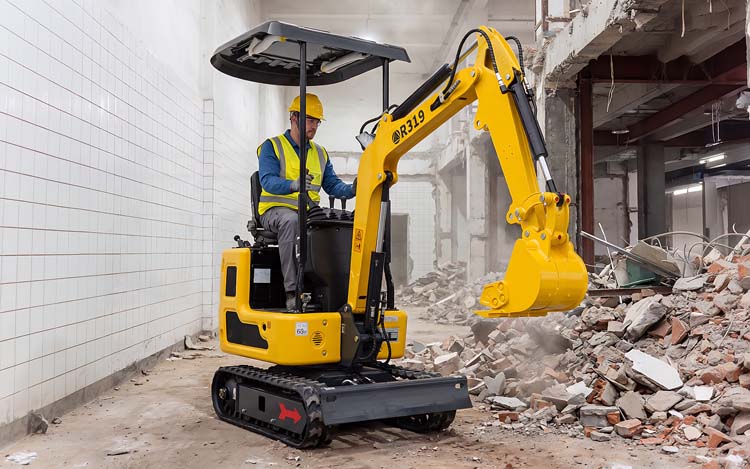
Prepare Parts and Service Support
After-sales service helps a new mini excavator dealer earn local trust. Stock frequently required maintenance parts, establish a clear warranty-reporting process and train technicians to identify components correctly.
Current operator manuals, parts lists, maintenance schedules and model-specific documents should be available before the first customer delivery. Dealers should also know which components are held locally and which must be ordered from the factory.
Attachments can create additional revenue, but compatibility must be verified. Buckets, hydraulic breakers, augers and grapples have different hydraulic and connection requirements. Confirm attachment weight, coupler type, auxiliary hydraulic requirements and operating limits using documentation for the exact machine.
Review the Manufacturer and Dealer Agreement
Ask the manufacturer about territory arrangements, minimum order expectations, payment terms, production lead times, technical training and marketing support. Clarify how warranty cases are assessed and how quickly common replacement parts can be supplied.
Any regional exclusivity agreement should define measurable responsibilities for both parties. Dealers should understand whether exclusivity depends on annual purchases, local promotion, service capability or sales performance.
Regional compliance also requires verification. Engine options, labels and supporting documents may differ by country and model. Request current information for the exact configuration being imported instead of relying on a general certification statement.
Apply to Become a RIPPA Mini Excavator Dealer
RIPPA works with machinery distributors, rental companies, wholesalers and equipment importers in international markets. The appropriate cooperation arrangement depends on the territory, expected order volume, existing sales channels, service capability and selected product range.
To discuss becoming a RIPPA mini excavator dealer, prepare the following information:
Company profile and business location
Target country or sales territory
Existing equipment sales channels
Expected annual demand
Preferred machine categories
Local warehouse and service resources
Required attachments and spare parts
Providing this information helps RIPPA evaluate market suitability and develop a practical cooperation plan covering machinery supply, attachments, logistics, documentation, parts and long-term dealer support.