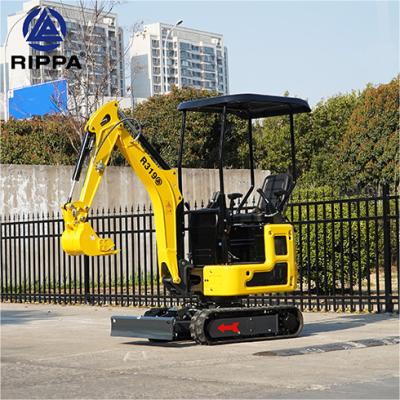
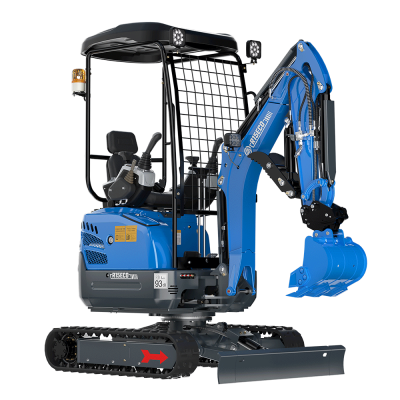
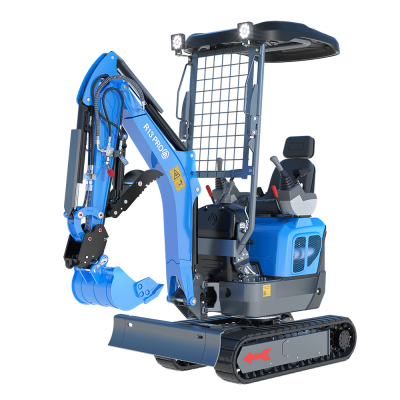
How to Find a Mini Excavator Manufacturer for Your Dealership
Finding the right mini excavator manufacturer involves comparing product quality, production capability, export experience, parts support, pricing, and dealer cooperation policies. Dealers should verify supplier information, review the complete cost of purchasing and delivering equipment, and establish clear commercial terms before placing an order.
For an equipment distributor, the manufacturer is more than a source of machines. It is a long-term partner whose production consistency and communication can directly affect customer satisfaction.
1. Define Your Product and Market Requirements
Start by identifying the customers you intend to serve. A dealer targeting landscaping companies may prioritize compact machines for restricted-access sites, while agricultural and construction customers may have different application requirements.
List the product categories, configurations, and supporting services your market needs. Consider transport arrangements, operator requirements, attachments, maintenance access, and local compliance obligations.
A clear product brief makes supplier comparisons more meaningful and reduces the risk of purchasing equipment that does not match customer demand.
2. Research Potential Manufacturers
Search for manufacturers through official company websites, trade exhibitions, industry directories, professional networks, and business referrals.
Review their product catalogs, company background, manufacturing facilities, quality-control procedures, export experience, and available technical documentation.
When possible, arrange a factory visit or request a live video tour. Ask for documentation that supports claims about manufacturing capability and quality procedures.
Do not assume that every company describing itself as a manufacturer operates its own production facilities. Verify the company's role in the supply chain and determine which components or processes are handled by third parties.
3. Evaluate Product Quality and Consistency
Product quality should be assessed through documentation, inspection, and a clear understanding of the manufacturer's quality-control process.
Ask how incoming components are checked, how machines are inspected during assembly, and what final testing takes place before shipment. Request inspection records or other appropriate evidence where available.
Review the accuracy and completeness of operator manuals, maintenance instructions, parts catalogs, and machine identification records.
If you plan to make a substantial investment, consider an independent pre-shipment inspection. Establish written acceptance criteria and a procedure for documenting defects or discrepancies.
4. Compare Complete Supplier Costs
The lowest factory quotation is not necessarily the lowest total cost.
Request a written quotation that specifies the machine configuration, included attachments, packaging, delivery terms, payment conditions, production lead time, and quotation validity.
Calculate the landed cost using relevant expenses such as:
International freight and cargo insurance
Customs duties and applicable taxes
Customs brokerage and port charges
Inland transportation
Unloading and equipment preparation
Financing and storage
Parts inventory and customer support
Confirm the applicable Incoterms and identify who is responsible for shipping, insurance, customs clearance, and risk at each stage.
Use the same assumptions when comparing quotations from different manufacturers.
5. Verify Parts and Technical Support
A reliable parts process is essential for dealers selling machinery to customers who depend on their equipment.
Ask how parts are identified, ordered, packaged, and shipped. Confirm whether exploded diagrams, part numbers, maintenance schedules, and troubleshooting documentation are available.
Discuss how the manufacturer handles urgent requests, technical questions, and warranty claims. Ask who pays freight for approved replacement parts and what evidence is required to submit a claim.
Avoid promising customers specific response times until you have confirmed that the manufacturer can support them consistently.
6. Confirm Export and Compliance Readiness
If you import equipment into the United States or another international market, confirm the applicable import, emissions, safety, labeling, and documentation requirements.
Request accurate engine information, product identification records, shipping documents, and relevant compliance evidence. Verify requirements independently with qualified customs professionals and the appropriate regulatory authorities.
A supplier's previous export experience is useful, but it does not automatically prove that every machine configuration meets every destination's requirements.
7. Negotiate a Long-Term Dealer Relationship
After comparing suppliers, discuss the commercial terms that will govern your relationship.
Important topics include dealer pricing, volume discounts, payment schedules, minimum orders, territory protection, annual targets, warranty responsibilities, marketing materials, and product training.
Clarify whether the manufacturer allows online sales and what restrictions apply to the use of its trademarks, product photographs, and promotional materials.
Request a written agreement before investing heavily in inventory or local promotion. Review the terms carefully and obtain professional advice when necessary.
8. Test the Relationship Before Scaling Up
Where practical, begin with a manageable order or a limited product selection. Use the initial transaction to evaluate production communication, document accuracy, shipment coordination, machine condition, and parts support.
Record any discrepancies and agree on corrective actions. Review the supplier's performance before increasing order volume.
A structured evaluation process helps you distinguish between a supplier that offers an attractive quotation and a manufacturer that can support sustainable dealership growth.
Frequently Asked Questions
What should dealers look for in a mini excavator manufacturer?
Prioritize verified product quality, consistent production, clear documentation, competitive total costs, reliable parts supply, and transparent commercial terms.
Should dealers choose a manufacturer based only on price?
No. Purchase price is only one part of the cost. Freight, duties, financing, quality issues, delivery reliability, and after-sales support also influence profitability.
Can dealers import mini excavators directly from overseas manufacturers?
Direct importing may be possible, but dealers must verify customs, emissions, safety, and other applicable requirements before ordering.
How can dealers verify a supplier?
Review business records, factory capabilities, product documentation, references, quality-control procedures, and commercial terms. Independent inspections can provide additional assurance.
Choose a Supplier That Supports Your Business
The right mini excavator manufacturer should help your dealership deliver consistent products and dependable customer service. Compare suppliers systematically, verify important claims, and document commercial expectations before committing to large orders.