How to Start a Mini Excavator Dealership Business
To start a mini excavator dealership business, define your target customers, calculate startup and operating costs, select a reliable manufacturer, and establish a process for sales, delivery, and after-sales support. You can build your business around stocked equipment, customer-specific orders, or a combination of both, depending on available capital and local demand.
A dealership can serve contractors, landscapers, agricultural businesses, and other buyers who need compact excavation equipment. The key is to build an operation that balances competitive pricing with reliable supply and customer service.
1. Choose Your Business Model
Your business model determines how much capital you need and how you fulfill customer orders.
Inventory-based dealership: You purchase machines in advance and keep selected products available locally. This can help customers who prioritize faster delivery, but it requires more working capital and inventory management.
Order-based dealership: You source equipment after receiving customer orders. This approach can reduce the amount of capital tied up in inventory, although delivery times and supplier coordination become especially important.
Hybrid dealership: You maintain selected machines and order additional configurations according to customer demand. This model may offer a practical balance between availability and inventory exposure.
Compare these approaches using realistic estimates of order volume, lead times, storage costs, and cash flow.
2. Identify Your Ideal Customers
Do not build your business plan around an undefined audience. Identify the industries and buyers most likely to purchase compact excavation equipment in your territory.
Potential customer groups include landscaping contractors, residential builders, utility contractors, farms, and property development companies.
Speak with prospective buyers to understand their purchasing criteria. Ask what applications they need equipment for, how they evaluate suppliers, what delivery arrangements they expect, and how important local parts support is to their decisions.
Use this information to decide which products to prioritize and how to position your dealership.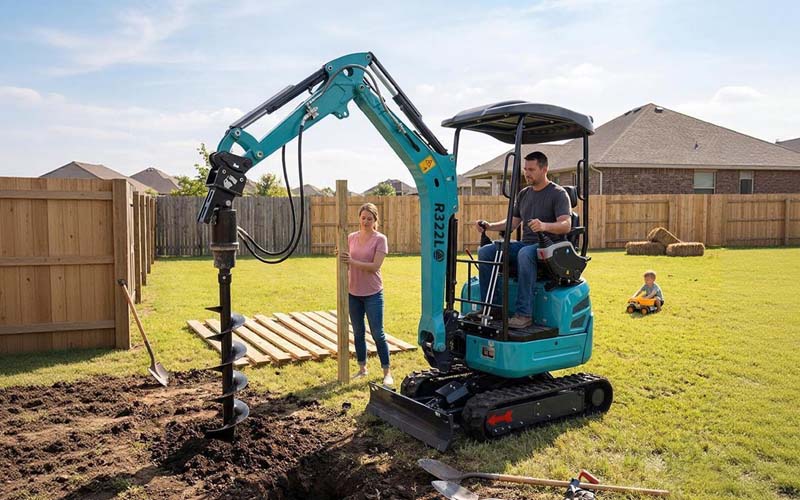
3. Calculate Startup and Operating Costs
Your startup budget should include more than the equipment purchase price.
Consider the following expenses:
Business formation and professional fees
Initial equipment purchases
Shipping, insurance, customs, and applicable taxes
Storage, display space, and equipment handling
Marketing and customer acquisition
Spare parts and service tools
Employee compensation and training
Financing costs and working capital
Prepare a monthly cash-flow forecast that accounts for deposits, supplier payment deadlines, delivery dates, and customer payments. A dealership may experience cash-flow pressure even when individual sales appear profitable.
Calculate gross margin and operating profit separately. Include all relevant costs before deciding whether a product or sales channel is financially attractive.
4. Select a Manufacturer and Negotiate Terms
Compare suppliers on product quality, production capacity, parts availability, documentation, export experience, and communication.
Request written quotations and ask how prices change with order quantities, configurations, shipping methods, and delivery locations.
Clarify minimum order quantities, payment schedules, lead times, warranty procedures, and responsibility for shipping damage. If you intend to represent the manufacturer as an authorized dealer, also discuss territory rights and brand usage.
Avoid choosing a supplier based on price alone. Delayed deliveries, missing parts, unclear documentation, or slow technical responses can undermine customer confidence and increase operating costs.
5. Establish Your Sales Channels
A dealership needs a clear path from customer discovery to completed purchase.
A professional website should explain your product range, purchasing process, business contact information, and available support. Individual product pages should provide accurate specifications, application guidance, clear photographs, and an easy way to request a quotation.
Complement your website with relevant SEO content, targeted search advertising, local business relationships, industry exhibitions, and follow-up with qualified prospects.
Track inquiries by source and measure how many become quotations and completed sales. This helps you allocate marketing resources based on actual business outcomes.
6. Plan Delivery, Parts, and Customer Support
Define what happens after a customer places an order. Your process should cover order confirmation, shipping updates, arrival inspection, customer handover, documentation, and post-sale follow-up.
Build a parts ordering process with the manufacturer. Keep records of commonly requested components and establish realistic response times for technical questions.
If you offer local maintenance or repairs, make sure qualified personnel and suitable facilities are available. If services are provided by third parties, explain the arrangement clearly to customers.
7. Measure Performance and Expand Carefully
During the early stages, monitor sales volume, gross margin, inventory turnover, lead conversion, delivery performance, and customer satisfaction.
Use these metrics to determine whether you should expand inventory, add product categories, invest in local service capabilities, or target new customer segments.
Expand only when the business has sufficient demand, working capital, and operational capacity. A disciplined approach can help a small dealership develop into a sustainable regional equipment distributor.
Frequently Asked Questions
How much does it cost to start a mini excavator dealership?
There is no single standard amount. Startup costs depend on inventory, shipping, premises, staffing, marketing, service arrangements, and supplier payment terms. Build a budget using actual quotations.
Can I start without a physical showroom?
Depending on local requirements and the supplier's policies, an order-based operation may be possible without a traditional showroom. You still need credible sales processes, clear delivery arrangements, and appropriate customer support.
How can a new dealership compete with established businesses?
Focus on a defined customer segment, responsive communication, transparent quotations, dependable fulfillment, and accessible parts support. Competing solely on price can make the business difficult to sustain.
When should I expand my dealership?
Consider expansion when sales demand is consistent, cash flow is manageable, customers receive reliable support, and your current operation can handle additional orders.
Build a Dealership for Long-Term Growth
A successful mini excavator dealership depends on a practical business model, reliable suppliers, disciplined financial planning, and strong customer relationships. Start with a clearly defined market and expand as your sales data and operating capacity justify further investment.