Evaluating Skid Steer Loader Suitability as a Matching Process
Assessing skid steer loader suitability requires understanding how machine characteristics align with real working conditions rather than searching for a single “best” model. The core idea is compatibility. Different job sites, materials, and workflows place different demands on equipment, and no single configuration can optimally satisfy all users. Suitability depends on how closely a machine’s functional limits match the actual operational needs and constraints.
Key decision dimensions usually include intended application scenarios, operating frequency, baseline performance requirements, and site or maintenance limitations. Each of these dimensions involves trade-offs. Higher operating capacity may reduce maneuverability, compact dimensions may limit lift height, and greater attachment versatility can increase system complexity. Because working environments vary widely, skid steer loader selection is inherently contextual rather than universal.
Understanding these trade-offs early helps buyers avoid over-specification or under-performance. The goal is not maximum capability on paper, but practical alignment between what the machine can do and what the job truly requires on a daily basis.
Core Requirements to Define Before Purchase
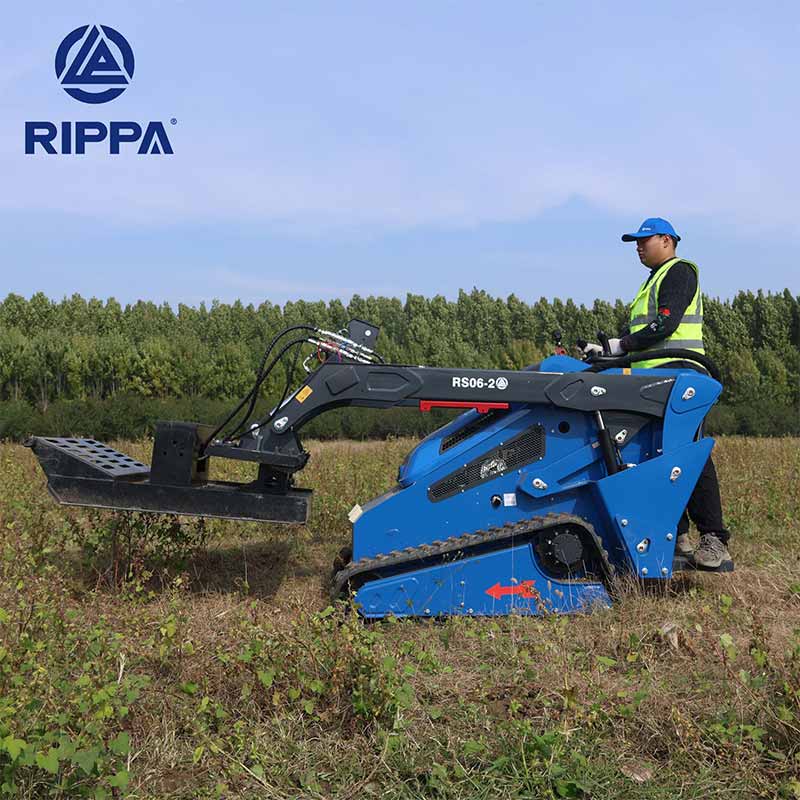
Clarifying core requirements before purchase is essential for narrowing down suitable options. The first step is identifying primary usage scenarios. Skid steer loaders are commonly used for material handling, site clearing, grading, and operating various attachments. However, ground conditions, available space, and task types all influence whether a skid steer’s operating characteristics are appropriate for the job.
Operating frequency is another critical factor. Occasional use places very different stress patterns on components compared to daily or continuous operation. Higher utilization rates generally require greater wear tolerance, more robust systems, and easier access for routine maintenance. Machines intended for frequent use must be evaluated with long-term durability and service intervals in mind.
Basic performance requirements should also be clearly defined in advance. These typically include required lifting capacity and load stability, typical material density and handling methods, spatial constraints affecting machine width and turning, and whether auxiliary hydraulic functions are necessary. These requirements help define functional boundaries rather than focusing solely on maximum specifications, which may not translate into real-world efficiency.
How Key Parameters Influence Selection Across Use Cases
Critical skid steer parameters define the machine’s operational boundaries and directly influence suitability. Rated operating capacity determines safe lifting limits but is closely tied to overall machine size and weight. Larger capacities often improve lifting potential while reducing access to confined areas and increasing ground impact.
Machine dimensions affect ease of entry into tight spaces and also influence stability during lifting operations. Hydraulic flow and pressure determine attachment compatibility and performance, yet higher hydraulic output typically increases system complexity and maintenance demands. Lift path design influences material placement height and reach, even though it does not change the fundamental ability to handle dense materials.
Improving one parameter often constrains another, making trade-off evaluation unavoidable. For construction and site preparation work, priorities often include short-cycle loading efficiency, stability on compacted or mixed surfaces, and compatibility with buckets and forks. Landscaping and property maintenance applications usually emphasize compact size, controlled ground impact, and attachment versatility. Indoor or confined-space operations place greater importance on overall width, turning radius, surface interaction, and predictable lifting rather than high output.
Operating and maintenance conditions further affect purchasing decisions. Environmental factors such as dust, humidity, temperature variation, and surface hardness influence wear rates and system stress. Limited access to service support can also restrict the acceptable level of mechanical or hydraulic complexity. Maintenance requirements vary with attachment usage intensity, hydraulic system design, and accumulated operating hours, making it essential to align machine demands with available maintenance capacity.
There are also scenarios where a skid steer loader may not be suitable. Tasks involving deep excavation, long-distance material transport, continuous lifting near maximum capacity, operation on highly sensitive finished surfaces, or sites with insufficient maneuvering space may be better served by other types of equipment. In such cases, selecting an alternative machine type can improve efficiency and reduce operational risk.
Common purchasing questions often arise during evaluation. Higher capacity does not automatically improve suitability, as increased lifting ability may reduce maneuverability and ease of operation. Skid steer loaders are not suitable for all terrains, as performance is closely linked to surface conditions and ground stability. A single skid steer cannot optimally perform all attachment tasks, since attachment effectiveness depends on hydraulic parameters and operational limits. Ultimately, skid steer loader suitability should be viewed as a matching process, focusing on alignment between application needs, parameter ranges, and real-world constraints rather than assuming a universal solution exists.