How Excavators Work and Their Applications
You might think operating an excavator is just like driving a car, but what if I told you there's no steering wheel in the cockpit? We've all seen these yellow steel giants at construction sites, swinging their massive arms with precision and power. But where does the strength of this familiar machine come from? And how does it perform all its complex movements with just two joysticks?
If a construction site is a stage, two often-confused protagonists are the excavator and its close relative, the loader. Distinguishing them is simple: an excavator's primary job is to dig downward, scooping the earth like a spoon. A loader, on the other hand, shovels forward, scooping and transporting loose materials like sand and gravel. This is the first step in understanding common types of construction machinery.
This guide will uncover the secrets of this behemoth, from its unique hydraulic "muscles" to the "game controllers" in its cockpit. The next time you see one, you'll truly understand how it works.
Getting to Know the Excavator's Body
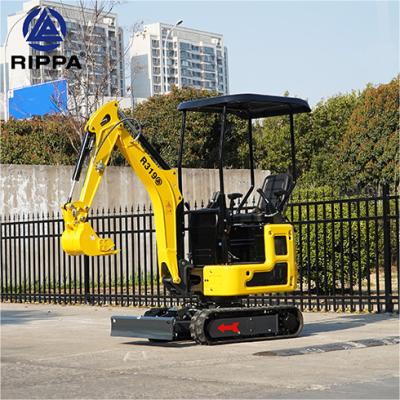
If you imagine an excavator as a steel giant, its most striking feature is its massive arm. This arm is much like our own, consisting of three main parts. The large section connected to the machine's body, responsible for lifting, is the Boom. The middle section that connects to the "hand" is the Stick (or Arm). Finally, the "hand" used for digging is the part we all recognize: the Bucket. Remembering these three key components—Boom, Stick, and Bucket—already makes you more knowledgeable than most.
Why does this multi-ton machine use tracks instead of wheels? The answer lies in its "feet"—two wide Tracks. The tracks distribute the immense weight evenly across the ground, much like snowshoes prevent you from sinking in deep snow. This allows the excavator to remain stable and operate effectively on soft soil or rugged terrain.
The command center for all this action is the glass-enclosed Cab. Here, the operator sits and directs the massive machine's every move, like piloting a sophisticated mech suit.
Now you can recognize the excavator's main parts. But a new question arises: where does the power for this steel arm come from? It's not driven directly by a giant motor as you might think. The answer lies in its secret weapon.
The Secret to the Excavator's Power: Hydraulic Muscles
The incredible force that can easily break through hard ground doesn't come from a huge motor on the arm itself. It originates from a sophisticated power transmission system—the Hydraulic System. Think of it as the machine's muscular and circulatory systems combined. This design elegantly answers the core question of how excavators work: power isn't delivered with brute force but is precisely controlled and distributed.
The excavator's engine doesn't directly drive the arm. Instead, it acts like a heart, primarily powering a strong pump. This pump sends special hydraulic fluid through durable hoses (the "blood vessels") at extremely high pressure to various joints in the arm. When this high-pressure fluid enters the thick steel tubes on the arm—the Hydraulic Cylinders—it pushes internal pistons, generating immense and smooth pushing or pulling forces.
Next time you see an excavator at work, pay attention to the shiny metal tubes extending and retracting on the boom and stick. Those are the hydraulic cylinders in action. This system allows the excavator to be both incredibly powerful and capable of delicate, precise adjustments. Now that we know where the power comes from, how does the operator in the cab harness it?
Inside the Cockpit: More Like Gaming Than Driving
Enter an excavator's cab, and the first thing you'll notice is the absence of a steering wheel. To operate an excavator, you need to shift your mindset from "driving" to "gaming." On either side of the operator's seat are two crucial control levers, commonly known as joysticks. Paired with foot pedals, they command the steel beast's every action.
These two joysticks have distinct functions, which is the first step in mastering hydraulic excavator operation. Typically, the left joystick controls the rotation of the machine's body and the extension of the stick (the forearm). The right joystick manages the lifting of the boom (the main arm) and the opening and closing of the bucket. A skilled operator's hands move as if playing an instrument, using subtle pushes, pulls, and twists to perform complex, coordinated movements—from powerful digging to carefully placing pipes.
Operating an excavator requires exceptional hand-eye coordination. Every precise dig, leveling motion, or loading action depends on the operator's split-second coordination of the joysticks and pedals. It's far more complex than driving and more akin to playing an immersive, large-scale simulation game.
Different Sizes for Different Jobs: Crawler vs. Wheeled
When it comes to mobility, the most common type of excavator is the one with two "tank tracks." This is a Crawler Excavator. Its advantages are obvious: its large ground contact area provides excellent stability, allowing it to work firmly on muddy or uneven construction sites without sinking.
However, tracks have their downsides: they are slow and can damage paved roads. To address this, the Wheeled Excavator was created. Equipped with tires like a car, it can travel quickly on city streets, moving flexibly between different job sites. This makes it ideal for sporadic tasks like municipal repairs that require frequent relocation.
In short, the choice between these two mainstream excavators is a trade-off between stability and speed:
Crawler: Strong off-road capability and stable operation; slow and damaging to pavement.
Wheeled: Fast on roads and non-damaging; less stable on soft ground than a crawler.
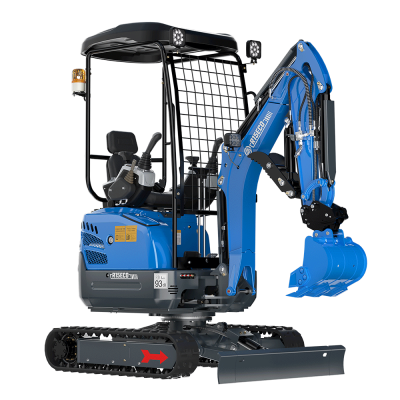
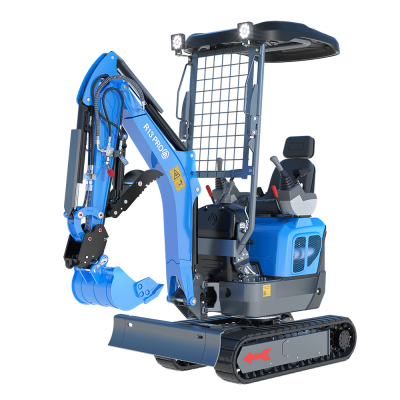
Besides these two, the excavator family includes smaller, more agile members like the Mini-Excavator. These can fit into narrow backyards, orchards, or even indoors for renovation work, handling delicate jobs that larger machines can't.
More Than Just Digging: The Excavator's Toolbox
While the bucket is an excavator's most iconic feature, it's actually interchangeable. The excavator's "wrist" is a universal interface, allowing it to switch out tools much like changing bits on a power drill. These replaceable tools, known as Attachments, can instantly transform an excavator from a simple digger into a multi-functional warrior.
Two of the most common attachments are true powerhouses. When you hear an excavator making a loud "rat-a-tat" sound while breaking up hard concrete or rock, it's using a Hydraulic Breaker. This attachment acts like a giant, powerful jackhammer and is a primary tool in demolition work. When the job requires grabbing scrap metal, timber, or construction debris, the excavator will switch to a Grapple. This attachment functions like a strong, flexible steel claw, securely gripping objects of all shapes and sizes.
Thanks to these versatile attachments, an excavator is not just a digging machine but a mobile tool platform. It's a true multi-tasker in the world of construction machinery, capable of demolition, grabbing, and site grading. This adaptability also demands a higher level of skill from its operators.
Want to Be an Operator? Here's What You Need to Know
Watching operators skillfully maneuver these huge machines might make you wonder: is it hard to operate one? Do you need a special license? The answer is yes, but it's not your standard driver's license. Operating an excavator is considered a specialized trade due to the complex machinery and potential safety risks. Therefore, operators must obtain a nationally recognized Specialized Work Operation Permit, which serves as their professional certification.
The path for a newcomer typically involves three steps at a professional training school:
Professional Training: Systematically learn the excavator's structure, principles, and safety regulations.
Extensive Practice: Under an instructor's guidance, practice everything from basic digging and swinging to more advanced techniques like grading and trenching.
Certification Exam: Pass both a written and a practical exam to earn the crucial operation permit.
Earning the certificate is just the beginning. Operating a real excavator is far more complex than it looks and is nothing like playing with a LEGO® model. It demands excellent hand-eye coordination, spatial awareness, and extensive experience. A great operator doesn't just dig; they dig accurately, efficiently, and safely. It's not just a job—it's a craft that requires patience and skill.
What to Consider When Buying an Excavator
How much does an excavator cost? The answer is as broad as asking "how much does a car cost?" A new mini-excavator might be priced similarly to a high-end sedan, while the giants used in large-scale mining can cost millions. Consequently, the first major decision for many buyers is weighing a reliable but expensive new machine against a cheaper but riskier used one.
In the second-hand market, the most important metric isn't the year of manufacture but its working hours, which is like a car's mileage. A machine with thousands of working hours may have significant wear on core components like the engine and hydraulic system, leading to staggering repair costs. Thoroughly inspecting the machine's condition is the most critical step when buying used.
In this context, brand becomes an important indicator of reliability. Industry-recognized international giants like Caterpillar (USA) and Komatsu (Japan), along with Chinese leaders like SANY and XCMG, are trusted for their durability and comprehensive service. Brands like Caterpillar offer a full range of models covering every need, from micro to ultra-large.
A new trend is also emerging: electric excavators. The pros and cons of electric models are clear: they operate with almost no noise or emissions, making them ideal for urban or tunnel construction. However, their battery life is limited, and they depend on charging infrastructure.
Keeping the Steel Giant in Top Shape
If an excavator seems slow and weak, the problem often lies with its "muscles"—the hydraulic system. This could be due to low hydraulic fluid or a leak. Just like people get tired, these seemingly indestructible machines need regular care to perform at their best. Without proper maintenance, even the most powerful equipment will eventually break down.
Professional operators conduct a routine check before starting work each day. This simple daily maintenance checklist includes three key items:
Oil Levels: Check the "blood" of the engine and hydraulic system.
Water/Coolant Level: Ensure the cooling system is working to prevent the engine from overheating.
Grease: Lubricate all moving joints.
Applying grease, known in the trade as "buttering," is one of the most visible and vital daily tasks. The operator uses a grease gun to inject thick lubricant into grease fittings on the boom, stick, and other moving joints. This is like lubricating the machine's skeletal joints to prevent direct metal-on-metal friction. Skipping this step can quickly cause the steel arm to become stiff or severely damaged from wear.
You're Now an Excavator Insider
Before, that massive machine swinging its steel arm on a construction site might have been just a noisy, dusty silhouette. But now, when you see an excavator, you'll see it through different eyes. You can not only distinguish its boom and stick but also understand the true source of its immense power—the precisely controlled hydraulic system. You even know that operating it is more like a complex video game than simply turning a steering wheel.
This journey has shown that the construction machinery around us is far more sophisticated than we might imagine. Understanding how an excavator works reveals the secrets behind its efficiency. From the stabilizing tracks and the hydraulic heart to the versatile attachments, it's the seamless integration of these elements that makes the excavator such a capable, multi-talented machine.
From now on, a construction site is no longer just a place of noise and dust; it's a stage you can interpret and appreciate. The next time you pass by one, try pointing out what you see to a friend and share the secrets of this giant. You've unlocked the key to making the ordinary fascinating.