Mini Excavator Dealer Support That Builds Customer Confidence
Mini excavator dealer support determines what happens after a customer signs the order. Training, technical documents, warranty handling, and spare-parts planning allow a local dealer to resolve problems quickly and protect its reputation. For this reason, support capability should be evaluated before inventory size or advertising budget.
Sales Training Should Be Application-Based
Customers rarely ask only for a machine weight or engine name. They describe a trench, a narrow gate, uneven ground, a trailer limit, or an attachment they want to operate. Sales staff need to translate those conditions into an appropriate machine class and configuration without promising capabilities that have not been verified.
Useful training covers operating applications, safe handover, basic inspection points, attachment selection, model differences, and the limits of each configuration. It should also teach sales teams when to refer a question to technical staff instead of guessing.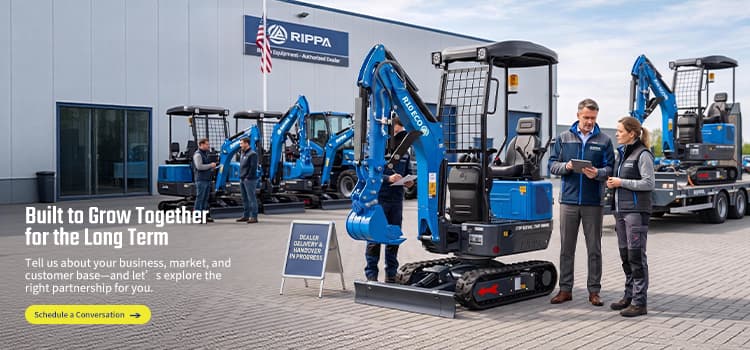
Parts Planning Starts Before the First Delivery
A dealer should not wait for a breakdown to identify essential components. The initial plan can include routine filters, seals, hoses, wear items, and other parts recommended for the specific machines being stocked. The correct list depends on the models, operating conditions, and expected annual usage.
Ask the manufacturer how parts are identified, ordered, packed, and tracked. Confirm the information required for a claim, such as a serial number, photos, video, service record, or fault description. Regional warehouse availability and delivery times can change, so obtain current details for your market.
A Clear Warranty Process Protects Both Sides
Customers need to understand what the warranty covers, how long it applies, which maintenance records are required, and which items are considered normal wear. Dealers should provide these terms during the sale rather than after a failure occurs.
Internally, the dealership needs one person responsible for collecting evidence and communicating with the manufacturer. Consistent records help technical teams diagnose problems and reduce unnecessary delays. They also reveal repeated issues that may require additional training or stocking adjustments.
The RIPPA Dealer Support Approach
RIPPA’s dealer program includes discussion of sales guidance, technical training, parts supply, warranty coordination, and marketing resources. The exact package should be confirmed for the applicant’s country, product selection, and agreement. Dealers should use onboarding to establish named contacts and written procedures for orders, service questions, and claims.
Strong mini excavator dealer support turns a product transaction into a dependable local service experience. Businesses considering a RIPPA partnership should present their sales area, workshop resources, technical team, and customer needs so both sides can design a practical support plan.