Skid Steer Snow Plow vs. Truck: Which is Better For Snow Removal?
Skid Steer Snow Plow: Agility and Versatility
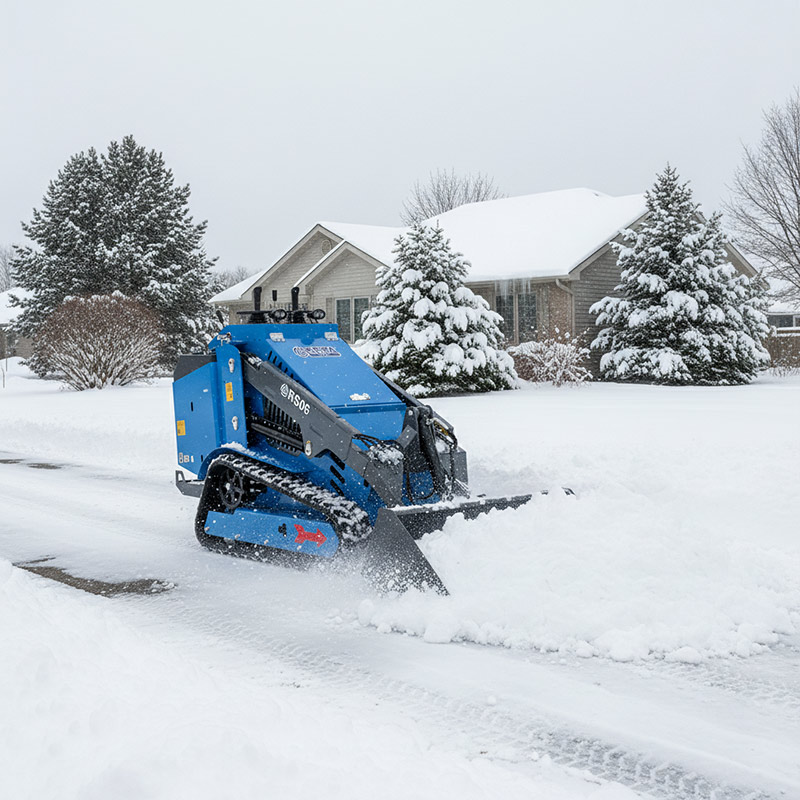
When it comes to maneuverability, skid steer snow plows are unmatched. Their compact design and zero-turn radius allow them to navigate tight spaces with ease, making them ideal for clearing parking lots, sidewalks, and narrow pathways. Operators can move around obstacles such as parked cars or landscaping features, ensuring that every inch of snow is cleared efficiently.
Skid steers are highly versatile, capable of being fitted with a variety of attachments, including push plows, snow blowers, and sweepers. This adaptability allows a single machine to tackle multiple snow removal tasks, from light dusting to heavy snow accumulation. The ability to switch attachments quickly transforms a skid steer into a true all-season snow management machine, perfect for businesses or municipalities needing flexible solutions.
Cost-effectiveness is another advantage. Skid steers generally consume less fuel than larger trucks and are easier to maintain. Their smaller size and lower operating costs make them accessible to homeowners, small business owners, and municipal teams looking for efficiency without sacrificing performance.
Despite their many advantages, skid steers do have limitations. Their lighter weight and smaller engine output can make it difficult to handle extremely deep snow or large snow piles. Additionally, their slower travel speed makes them less ideal for covering long distances quickly. However, pairing a skid steer with the right attachments often mitigates these drawbacks, allowing it to handle even demanding snow removal tasks.
Truck Snow Plows: Power and Coverage
Truck-mounted snow plows are known for their raw power and ability to handle massive snow accumulations. With a strong chassis and high-performance engine, trucks can tackle deep snow and large open areas such as highways, extensive parking lots, or long rural roads. Their heavy weight and high torque make pushing thick snow effortless, which is crucial for large-scale snow removal operations.
Another advantage of trucks is their high-speed travel capability. For crews needing to clear multiple locations quickly, trucks provide efficient transportation between sites, allowing for faster coverage and shorter response times. This makes them ideal for municipal or commercial snow management where speed and volume are critical.
However, trucks have notable limitations. Their large size and limited maneuverability make them less effective in tight spaces or complex environments. Snow can get left behind in areas that trucks cannot access. Additionally, trucks are a more significant financial investment, with higher upfront costs and increased fuel consumption. Unlike skid steers, trucks offer limited versatility—beyond snow plowing, they have few alternative applications.
Choosing the Right Snow Removal Equipment
Selecting between a skid steer and a truck snow plow ultimately depends on the environment and the scale of snow removal required. For confined spaces, high agility, and multi-task capabilities, skid steers are typically the superior choice. They are economical, adaptable, and efficient for small to medium areas.
For large-scale operations requiring heavy-duty performance, fast travel between sites, and the ability to move large snow volumes, truck plows offer the power and reach needed to keep roads and parking lots clear. They are better suited for municipal operations, large commercial properties, or areas experiencing deep snow accumulation.
In many cases, a combination of both may provide the most comprehensive solution: skid steers for precision clearing in tight areas and trucks for major roads and expansive spaces. Evaluating your property size, snow patterns, and operational needs will help determine which equipment—or mix of equipment—will dominate this winter’s snow challenges.