The Ultimate Skid Steer Loader Buyer's Guide: How to Choose the Right One for You
Selecting the right skid steer loader is a significant investment. With numerous brands and configurations on the market, finding the perfect match for your specific needs can be daunting. This guide will walk you through the critical decision points, helping you understand which features matter most for your work, and will highlight how Rippa skid steer loaders are engineered to meet these diverse demands.
Pre-Purchase Essentials: Defining Your "Application + Conditions + Site Constraints"
Before you even look at a machine, you must answer three fundamental questions. These will form the foundation of your search and save you from costly mistakes.
What is the Primary Application?
Identifying the main use—landscaping, grading, excavation, material handling, paving, snow removal, or general multi-purpose work—is the first and most critical step. Different applications have vastly different requirements for machine specifications and attachments. For example, demolition work demands a machine with high auxiliary hydraulic flow for a hammer, while fine grading requires precise controls and a tilt attachment. Your primary tasks will dictate the necessary horsepower, lift capacity, and hydraulic system capabilities.
What Are the Working Environment and Ground Conditions?
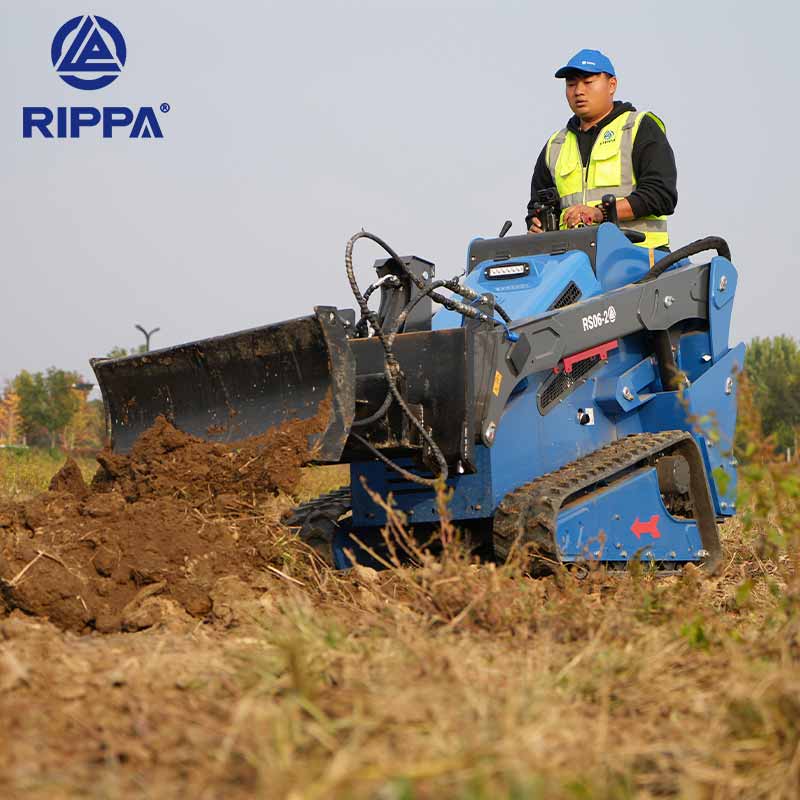
You must assess the terrain where the machine will operate most frequently. Will you be working on hard, flat surfaces like concrete or asphalt, or on soft, muddy, or uneven ground like fields, forests, or slopes? This single factor is the primary determinant of whether you need a wheeled skid steer or a compact track loader. Wheeled models offer higher top speeds and are less expensive but can cause significant turf damage and struggle in soft conditions. Track skid steers, like many in the Rippa lineup, provide superior traction, flotation, and stability on challenging terrain with far less ground disturbance.
What Are the Site Space and Access Limitations?
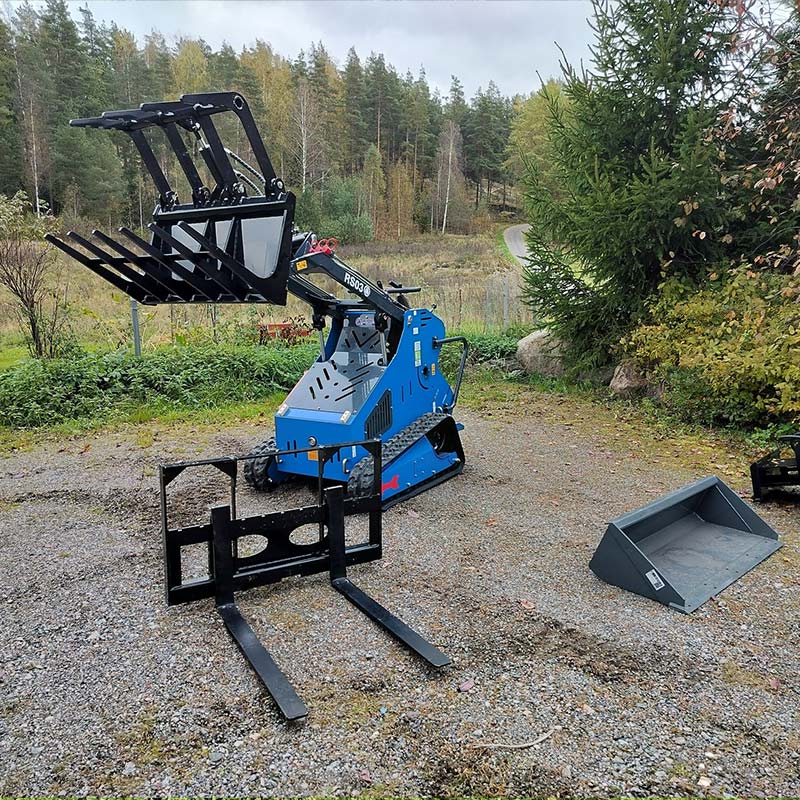
Consider the physical constraints of your job sites. Are there narrow gates to pass through, tight alleyways, or low overhead clearances? Is the primary workspace confined, such as inside a building or a residential backyard? If space is severely limited, a mini skid steer loader or a particularly compact model is essential. The machine’s overall width, height, and tail swing radius become crucial specifications. A machine that can't access the work area is useless, no matter how powerful it is.
Key Technical Specifications and Design Points: Matching "Machine Size + Function + Accessibility"
Once you have clarity on your needs, you can effectively evaluate technical specs. Focus on these core areas to find a machine that aligns with your operational reality.
Engine Power and Hydraulic Performance
Engine horsepower (HP) and torque determine the machine's ability to power through tough tasks and handle heavy loads. Equally important is the hydraulic system's flow rate (measured in liters per minute or gallons per minute). High flow is necessary to run demanding attachments like cold planers, brush cutters, and large hydraulic hammers efficiently. Look for a machine with a balance of reliable engine power, such as the proven Kubota engines in Rippa loaders, and a robust hydraulic system that delivers consistent performance.
Operating Capacity and Machine Size
The rated operating capacity (ROC) tells you how much weight the machine can safely lift. It’s vital to match this to your most common material handling tasks. However, don't just chase the highest number; a larger machine with a higher ROC is also heavier, wider, and less fuel-efficient. You must find the sweet spot that offers enough capacity for your work while still meeting your site access requirements. Consider the machine's physical dimensions—width, height, and length—against your site limitations.
Operator Comfort and Control Systems
An operator who is fatigued or frustrated is less productive and safe. Evaluate the cab's ergonomics: visibility, seat comfort, control layout, and ease of entry/exit. Advanced features like two-speed travel, selectable hydraulic modes, and programmable joystick buttons can dramatically improve efficiency and reduce fatigue over long days. A comfortable, intuitive operating environment, a hallmark of Rippa's design philosophy, directly translates to higher productivity and lower operator turnover.
How Rippa Skid Steer Loaders Meet These Critical Needs
Rippa skid steer loaders are designed with the real-world challenges of contractors and business owners in mind. The product line offers both wheeled and track models, allowing you to choose the perfect undercarriage for your ground conditions. Their compact models excel in tight access scenarios, while maintaining impressive power and lift capacities for their size.
The core strength of a Rippa loader lies in its value-driven performance. It combines reliable, fuel-efficient Kubota engines with durable frames and high-performance hydraulic systems. This ensures you have the power and hydraulic flow needed for a wide range of attachments without paying a premium for brand name alone. The intuitive control systems and comfortable cabs are built for all-day productivity, reducing operator strain.
Furthermore, Rippa's commitment to a high standard of after-sales support and readily available parts ensures your investment is protected for the long term. By offering a compelling blend of accessibility, power, versatility, and durability, Rippa skid steers present a smart, cost-effective solution that is carefully matched to the specific "Application + Conditions + Site Constraints" defined by savvy buyers. Whether you need a nimble mini skid steer for landscaping or a robust compact track loader for construction, understanding your needs first will lead you to the right Rippa model for the job.