Backhoe Loader for Farm Maintenance: Ditch Cleaning, Material Moving, and Property Work
Farm maintenance involves more than planting and harvesting. Agricultural properties regularly require drainage work, soil movement, access road repairs, material handling, and general site preparation. For farms that need both digging and loading capabilities, a backhoe loader can be a practical equipment option.
A backhoe loader combines a front loader and a rear excavating attachment in one machine. This allows operators to handle different tasks without relying on separate machines for every job. For agricultural contractors, property managers, and equipment dealers, understanding these applications is important when evaluating equipment for farm operations.
1. Why Use a Backhoe Loader for Farm Maintenance?
Farm properties often contain different working areas, including fields, storage yards, access roads, drainage channels, and livestock facilities. The equipment required for each task can vary.
A backhoe loader offers two main working functions:
Front loader: Used for moving soil, gravel, sand, feed-related materials, and other suitable loads.
Rear excavating attachment: Used for digging trenches, preparing small foundations, and carrying out localized excavation work.
This combination can help reduce the need to move multiple machines between separate work areas.
However, the suitability of a backhoe loader depends on the farm's terrain, workload, material type, and required digging or loading capacity. Buyers should evaluate the actual tasks before selecting a machine.
2. Ditch Cleaning and Agricultural Drainage
Drainage maintenance is a common requirement on agricultural properties. Blocked or damaged drainage channels can affect field access, water movement, and the condition of surrounding land.
A backhoe loader can assist with several drainage-related tasks.
Cleaning Small Drainage Channels
The rear excavating attachment can be used to remove accumulated soil and debris from suitable drainage areas. Before beginning work, operators should identify underground utilities, check ground conditions, and confirm safe access to the ditch.
Repairing Drainage Sections
Localized excavation may be required when a drainage channel needs reshaping or when damaged sections need to be accessed for repair.
Preparing Small Drainage Trenches
The excavating attachment can help prepare trenches for certain agricultural drainage projects. Trench dimensions and excavation methods should be determined according to the project design and local requirements.
A backhoe loader should not automatically be considered suitable for every drainage project. Deep excavation, unstable soil, waterlogged ground, and large-scale land drainage may require specialized equipment and additional safety measures.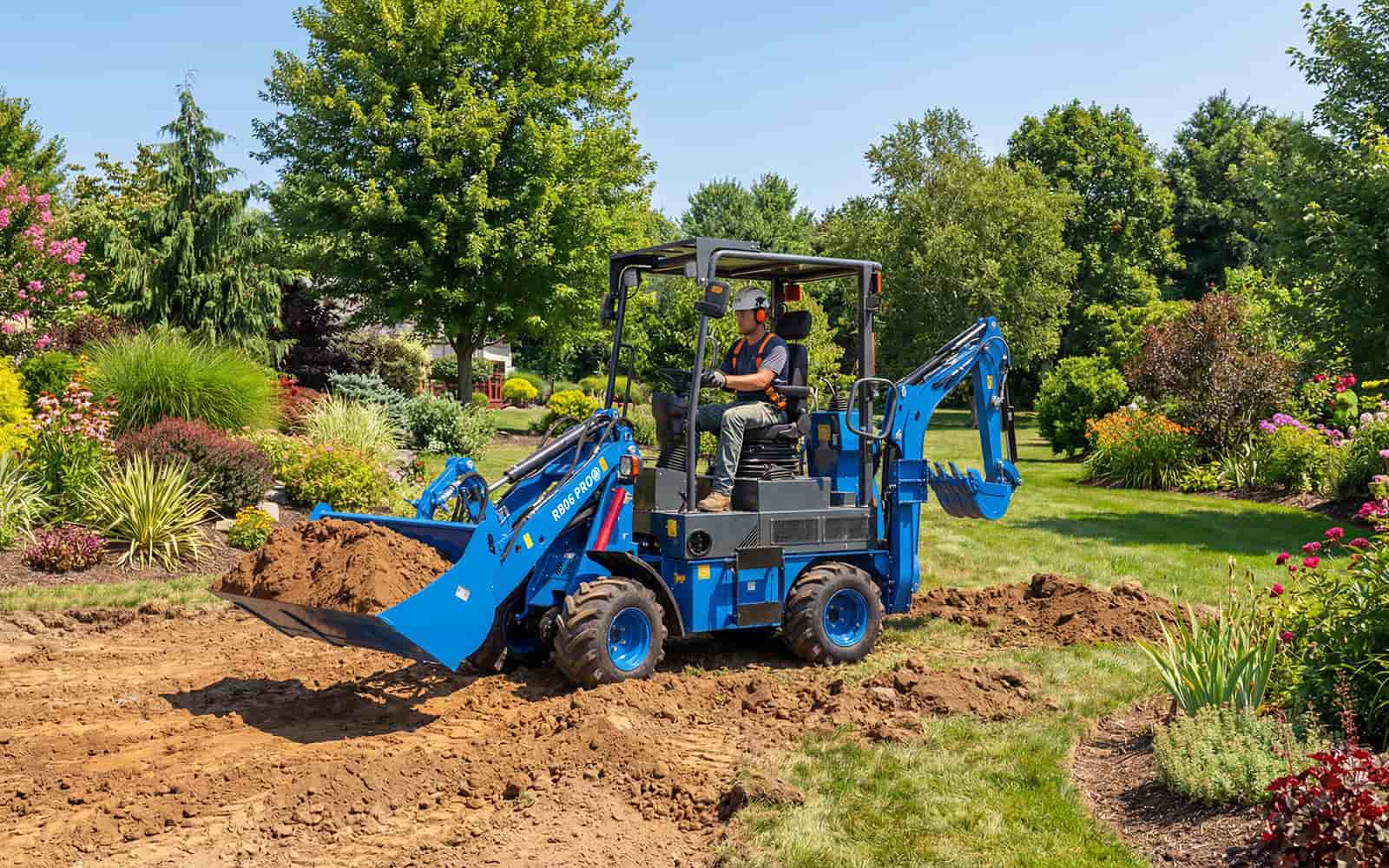
3. Moving Materials Around the Farm
Material handling is another important part of daily farm maintenance.
The front loader can support a variety of tasks when the material and machine configuration are suitable.
Common examples include:
Moving gravel for farm access roads.
Transporting soil during ground preparation.
Loading loose materials into suitable transport equipment.
Moving sand and other construction materials around storage areas.
Clearing accumulated debris from designated working areas.
The correct bucket and machine configuration should be selected according to the material being handled.
For example, moving loose soil is different from handling dense or abrasive materials. Buyers should confirm the appropriate bucket design and operating requirements before using the machine for a particular task.
4. Farm Road and Property Maintenance
Agricultural access roads are exposed to repeated vehicle movement, changing weather, and varying ground conditions. Over time, potholes, uneven surfaces, and damaged road edges may make transportation more difficult.
A backhoe loader can assist with localized repair and preparation work.
Filling and Reshaping Damaged Areas
The front loader can move suitable fill material to areas requiring repair. Operators should assess the ground conditions and select material appropriate for the road surface.
Preparing Access Routes
Localized excavation and material movement can help prepare access routes around barns, storage buildings, and other farm facilities.
Clearing Working Areas
The machine can help remove loose soil, debris, and other materials from designated maintenance areas.
For larger road construction or grading projects, buyers should assess whether additional equipment is required to achieve the desired surface quality.
5. Supporting Farm Building and Facility Projects
Agricultural properties often require improvements to storage buildings, equipment shelters, livestock facilities, and material handling areas.
A backhoe loader may support selected preparation tasks, including:
Excavating suitable small foundation areas.
Preparing localized utility trenches.
Moving construction materials.
Clearing soil and debris from working areas.
Preparing ground around agricultural buildings.
Before excavation, operators should review construction plans, identify underground services, and follow relevant site safety requirements.
The machine's actual working capabilities must be checked against the project's required dimensions and ground conditions.
6. What Should Buyers Consider Before Choosing a Farm Backhoe Loader?
Not every farm has the same equipment requirements. A suitable purchasing decision should begin with an assessment of the work rather than simply comparing machine prices.
Main Working Applications
List the tasks the machine will perform most frequently. A farm focused on drainage maintenance may have different requirements from one that mainly moves materials around storage yards.
Ground Conditions
Consider whether the machine will work on firm surfaces, uneven ground, soft soil, or muddy areas. Operating conditions influence equipment selection and safe working practices.
Machine Configuration
Check the engine, hydraulic system, tires, bucket, rear attachment, and other relevant options against the manufacturer's current product documentation.
Operator Requirements
Consider visibility, control layout, access to the operating area, and the availability of trained operators.
Maintenance and Parts
Ask the manufacturer about routine maintenance requirements and how replacement parts can be identified and ordered.
Transportation
If the machine needs to move between separate farm properties, check the transportation arrangements and applicable road regulations.
7. Questions to Ask a Backhoe Loader Manufacturer
Agricultural equipment dealers and importers should obtain clear information before placing an order.
Consider asking the manufacturer:
Which machine configuration is suitable for the intended farm applications?
What front bucket and rear attachment options are available?
What engine and hydraulic configurations are offered?
Which maintenance documents are supplied?
What parts information is available for routine servicing?
What are the machine's transportation dimensions and shipping requirements?
Which documents are required for the destination market?
For wholesale orders, dealers should also confirm that the agreed configuration and included accessories are clearly recorded for each machine.
8. Is a Backhoe Loader the Right Choice for Every Farm?
No. A backhoe loader is useful when a farm needs a combination of digging and loading functions, but other machines may be more appropriate for specialized tasks.
For example, a dedicated wheel loader may be more suitable for operations involving frequent material handling. A mini excavator may be more appropriate for work in restricted spaces or projects requiring a compact digging machine.
The right choice depends on task frequency, site conditions, transportation needs, and the required working capabilities.
Rather than choosing equipment based on one advertised feature, buyers should compare the complete machine configuration with their actual workload.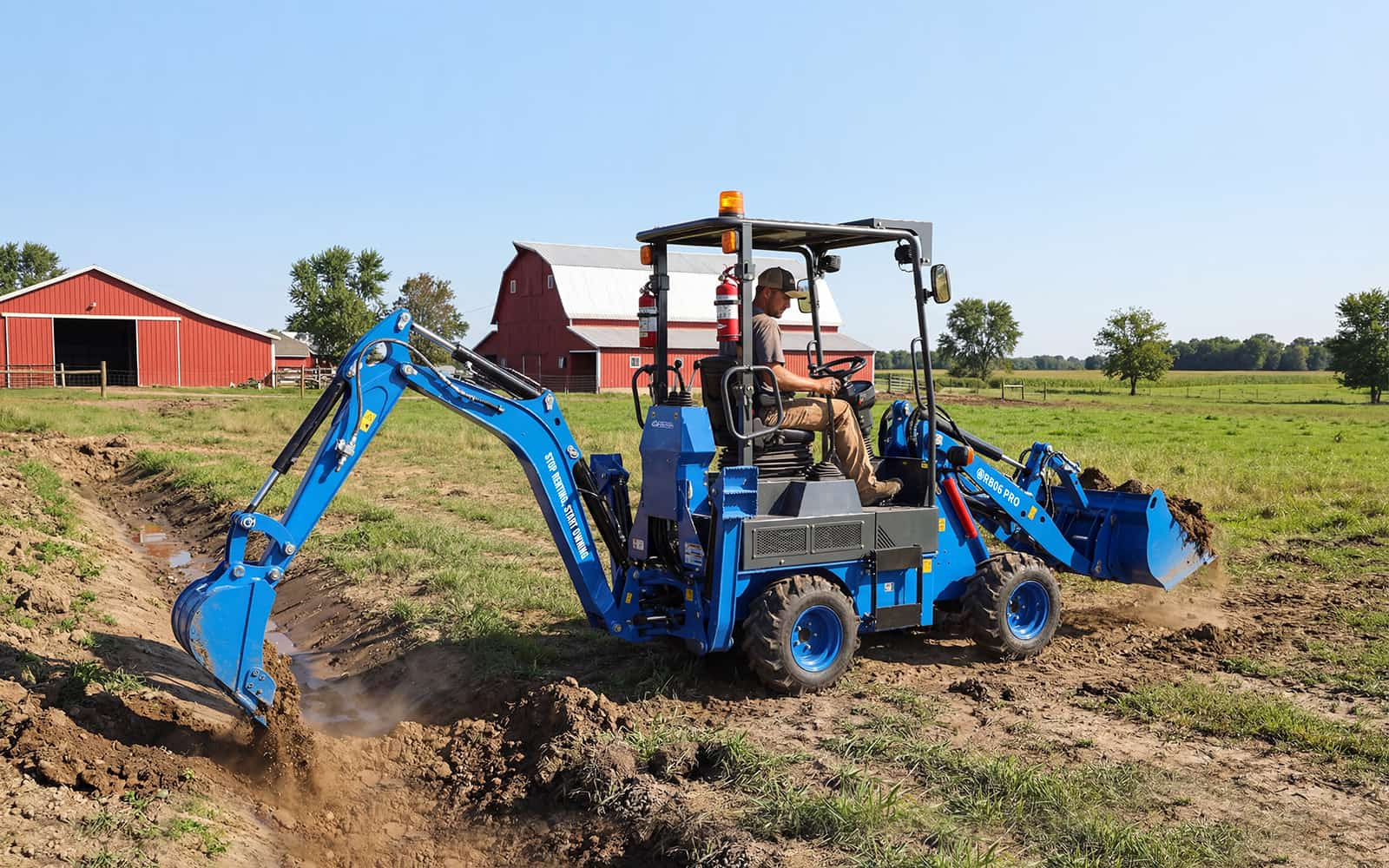
Frequently Asked Questions
What is a backhoe loader used for on a farm?
A backhoe loader can support drainage maintenance, localized excavation, material movement, access road repairs, and preparation work around agricultural buildings.
Can a backhoe loader clean farm drainage ditches?
It can assist with cleaning suitable drainage channels and removing accumulated material. The actual suitability depends on ditch dimensions, ground conditions, machine configuration, and safe operating access.
Is a backhoe loader better than a mini excavator for farm work?
It depends on the workload. A backhoe loader combines digging and front-loading functions, while a mini excavator focuses on excavation. Buyers should compare the tasks they need to complete most frequently.
What attachments should farm buyers consider?
The front bucket and rear excavating attachment are important starting points. Additional attachments should only be selected after confirming compatibility with the specific machine.
What should agricultural equipment dealers check before importing a backhoe loader?
Dealers should verify the machine configuration, included attachments, product documentation, applicable destination-market requirements, shipping arrangements, and parts information.
Choose Equipment Around Your Farm's Actual Workload
A backhoe loader can support a wide range of agricultural property maintenance tasks, from localized drainage work to material movement and site preparation. Its value comes from combining digging and loading functions in one machine.
For agricultural contractors, importers, and equipment dealers, the most important step is to match the machine configuration with the work customers actually need to perform.
RIPPA offers backhoe loader products, including the RB06 model. Buyers should review the current product information and confirm the exact configuration, attachments, and purchasing details before ordering.
Contact RIPPA to discuss backhoe loader product information and wholesale purchasing requirements.