Choosing a Mini Excavator Supplier for Long-Term B2B Cooperation
A mini excavator supplier influences far more than the initial purchase price. For dealers, rental businesses and importers, the supplier affects inventory availability, delivery reliability, technical support and customer satisfaction. Choosing the right partner therefore requires an assessment of both the machines and the complete supply process.
Begin with Product and Market Fit
A supplier should help buyers identify suitable machine categories instead of recommending the same model for every customer. Consider typical job sites, access limitations, attachment demand, transport conditions and local purchasing power.
Landscaping contractors may prioritize compact dimensions and easy transportation, while agricultural users may value attachment versatility and straightforward maintenance. Rental companies often focus on durability, familiar controls and fast service access. Product selection should follow these operating needs.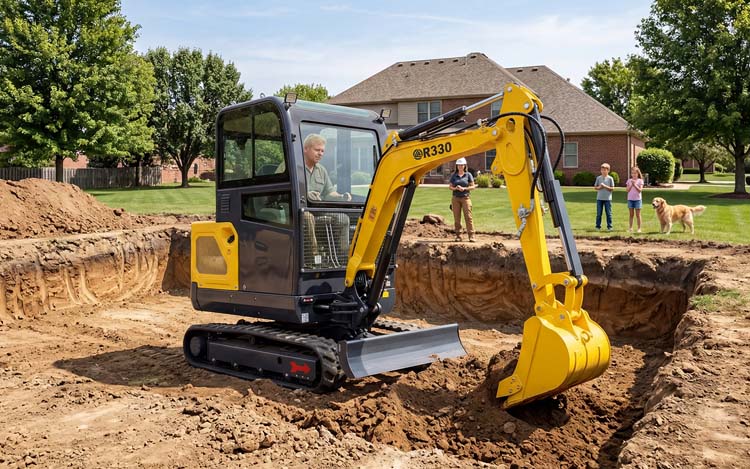
Demand Accurate and Consistent Information
Before ordering, compare the quotation, catalogue, manual and configuration sheet. Model names, included equipment and optional items should remain consistent across all documents. If specifications are central to the purchase, confirm them using the latest supplier documentation.
Buyers should also ask which compliance documents are available for the selected machine and market. A general statement about a brand or factory is not a substitute for model-specific verification.
Review Order and Delivery Management
A professional mini excavator supplier should explain payment terms, production timing, inspection arrangements, packaging and trade terms clearly. The buyer needs to understand when the order enters production, when configuration changes are no longer possible and which documents will be provided for shipping.
Packaging quality is especially important for international orders. Machines and accessories should be secured appropriately, while loose parts need clear identification to simplify unloading and inventory checks.
Test the After-Sales Process Early
Ask several practical questions before purchasing: Who receives a technical issue? What information is required for a warranty review? How are parts numbers confirmed? Are manuals and parts catalogues available?
RIPPA supports international machinery businesses seeking mini excavators, attachments, OEM services and dealer cooperation. The exact product configuration and documentation should be confirmed according to the destination market and current model information.
Choose a supplier that can communicate clearly before, during and after the sale. Stable documentation, responsive parts support and repeatable order management often provide more value than a small difference in unit price.