How to Choose a Compact Wheel Loader for Landscaping and Material Handling
Landscaping companies, agricultural businesses, and construction contractors often need equipment that can move materials, load soil, and handle repetitive transportation tasks.
A compact wheel loader can provide a practical solution for businesses that need lifting and material-handling capabilities without relying on larger construction machinery.
However, choosing the right wheel loader requires understanding the working environment, material types, and daily workload.
1. What Is a Compact Wheel Loader Used For?
A compact wheel loader is designed to move, lift, and transport materials across working areas.
Its applications extend beyond traditional construction sites.
Landscaping Projects
Landscaping contractors regularly handle soil, gravel, mulch, sand, and other materials.
A compact wheel loader can help with:
Moving soil around landscaping sites
Loading gravel and sand
Transporting mulch
Preparing garden areas
Moving landscaping materials
For companies managing multiple properties, having equipment dedicated to material handling can improve daily work organization.
Agricultural Operations
Farms frequently require equipment for moving feed, soil, agricultural materials, and other supplies.
A wheel loader may support repetitive loading tasks around farm buildings, storage areas, and working yards.
Construction Material Handling
On construction sites, compact wheel loaders can help transport loose materials between storage and working areas.
Typical applications include loading aggregate, moving soil, and organizing construction materials.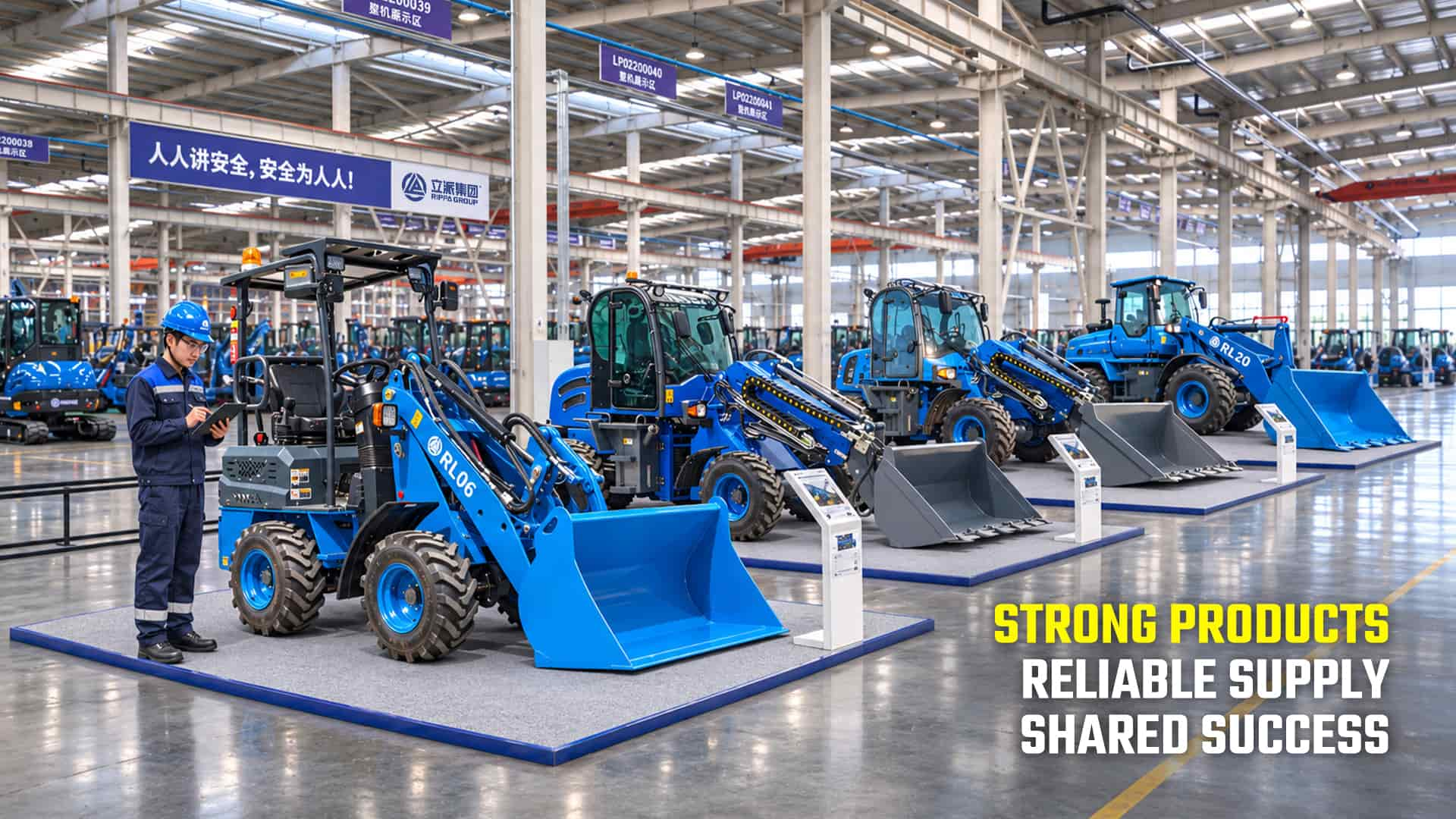
2. How to Choose the Right Small Wheel Loader
The best machine depends on the tasks it will perform most frequently.
Evaluate Material Types
Different materials have different weights and handling requirements.
Buyers should identify whether the machine will primarily handle soil, gravel, sand, agricultural materials, or other loads.
Material density and bucket selection should be considered together.
Review Lifting Requirements
Before purchasing, determine the required lifting height, loading position, and material transportation distance.
Check the manufacturer's rated operating information and lifting documentation against the actual work requirements.
Consider Ground Conditions
Working surfaces influence equipment selection.
Consider whether the machine will operate mainly on concrete, gravel, compacted soil, or uneven ground.
Tire selection and machine configuration should match the expected working environment.
3. Compact Wheel Loader vs. Skid Steer Loader
Both compact wheel loaders and skid steer loaders are used for material handling and property maintenance, but they serve different operating preferences.
| Comparison | Compact Wheel Loader | Skid Steer Loader |
|---|---|---|
| Main applications | Loading and carrying | Loading and versatile site work |
| Steering | Often articulated | Skid steering |
| Material handling | Suitable for repeated carrying tasks | Suitable for varied loading tasks |
| Attachments | Buckets, forks and other compatible tools | Broad range of compatible attachments |
| Working environment | Yards, farms and construction sites | Construction and landscaping sites |
A compact wheel loader may be preferable when repeated loading and carrying are the main activities.
A skid steer may be more appropriate when tight turning and frequent attachment changes are essential.
The final choice should depend on jobsite conditions and actual operating requirements.
4. What Should Equipment Buyers Check Before Purchasing?
Businesses purchasing a compact wheel loader should review several factors.
Machine Configuration
Confirm the engine, hydraulic system, operating weight, lifting capability, bucket configuration, and available options.
Maintenance and Parts Availability
Ask about routine maintenance, replacement parts, technical documentation, and after-sales support.
These considerations are particularly important for businesses operating equipment throughout the year.
Manufacturer and Supply Capacity
For importers and machinery distributors, supplier reliability is an important purchasing consideration.
Check manufacturing capabilities, order arrangements, product consistency, and communication processes before establishing a long-term supply relationship.
5. RIPPA RL06 Wheel Loader for Equipment Buyers
RIPPA offers compact construction machinery for international equipment buyers and distributors.
The RL06 wheel loader is one model that buyers can evaluate when sourcing compact loading equipment for material handling and property maintenance.
Before purchasing, compare the available RL06 configuration with your required working conditions and material-handling tasks.
International distributors can also discuss wholesale purchasing, product documentation, and supply arrangements directly with RIPPA.
Conclusion
Compact wheel loaders provide useful material-handling solutions for landscaping, agriculture, and construction businesses.
Choosing the right machine requires evaluating material types, lifting requirements, ground conditions, machine configuration, and long-term support.
RIPPA welcomes inquiries from international machinery distributors, contractors, and equipment importers.
Contact RIPPA to learn more about the RL06 wheel loader and available compact equipment solutions.