Mini Front Loader: What to Consider When Choosing a Compact Loader
Mini Front Loader: What to Consider When Choosing a Compact Loader
A mini front loader is designed for material handling and loading tasks in working environments where larger equipment may be difficult to operate.
For landscaping contractors, agricultural businesses, construction companies, and property maintenance teams, compact loaders can be considered for moving materials, handling soil, and supporting everyday site operations.
However, choosing a suitable machine requires more than comparing product photographs. Buyers should evaluate the working environment, loading requirements, machine configuration, and available attachments.
1. Understand Where a Mini Front Loader Can Be Used
Compact loaders are considered for a range of material-handling applications.
Landscaping projects
A compact loader may assist with moving soil, mulch, gravel, and other landscaping materials.
Agricultural operations
Farm businesses may use loading equipment to handle materials around barns, storage areas, and agricultural properties.
Construction sites
Compact loaders can support material movement and site preparation where their configuration is appropriate.
Property maintenance
For businesses maintaining commercial or residential properties, compact loading equipment may help with routine material-handling tasks.
The correct choice depends on the site conditions and the actual work required.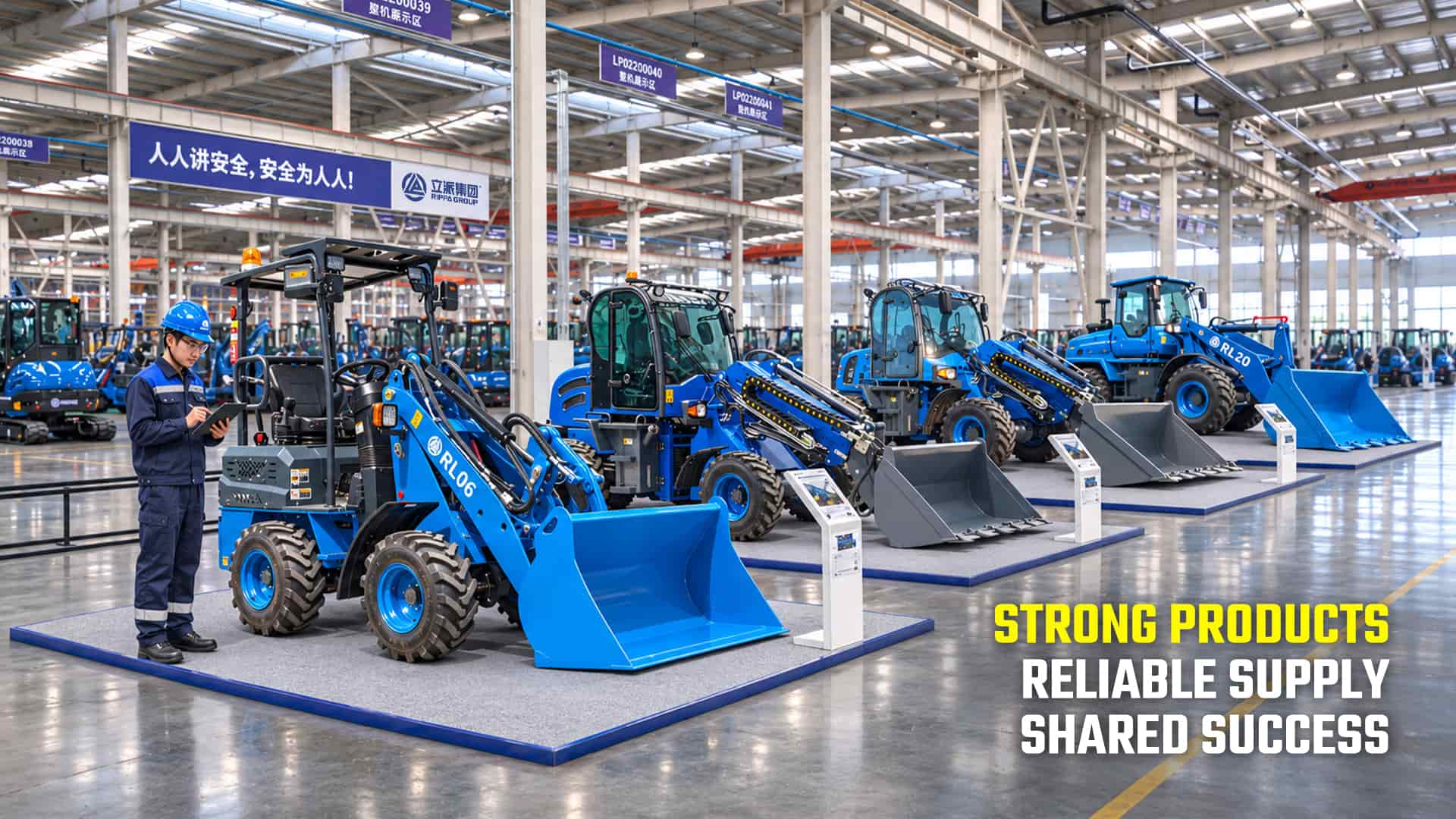
2. Mini Front Loader vs. Larger Wheel Loader
A mini front loader and a larger wheel loader serve different operating requirements.
| Consideration | Mini Front Loader | Larger Wheel Loader |
|---|---|---|
| Working environment | Compact or restricted areas | Larger working areas |
| Typical tasks | Smaller material-handling jobs | Larger loading operations |
| Site access | Depends on compact configuration | Requires more space |
| Transportation | Depends on machine configuration | Requires suitable transport arrangements |
| Purchasing decision | Application and access focused | Work volume and operating requirements focused |
Neither option is automatically better. Buyers should match the equipment to the work volume and operating environment.
3. Check the Important Machine Features
Before choosing a compact loader, buyers should review:
Machine dimensions
Operating weight
Loading capacity
Turning and maneuverability requirements
Tire configuration
Operator visibility
Bucket options
Attachment compatibility
These details should be checked in the official product documentation.
The machine must be suitable for the materials being handled and the ground conditions at the job site.
4. Consider Attachments for Different Tasks
The right attachment can influence the range of work a compact loader can perform.
Depending on compatibility, buyers may consider:
General-purpose buckets
Fork attachments
Grapples
Other material-handling attachments
Before purchasing an attachment, confirm the machine interface and any hydraulic or operating requirements with the supplier.
5. What Should Buyers Ask a Mini Loader Supplier?
When comparing mini front loader suppliers, buyers should ask clear questions about the product and purchasing process.
Useful questions include:
What compact loader models are currently available?
What are the official machine specifications?
Which bucket and attachment options are compatible?
What engine and configuration options are offered?
What documentation is provided for export orders?
How are spare parts identified and ordered?
What are the order and transportation arrangements?
These questions help businesses compare suppliers based on more than the initial quotation.
6. Choosing a Supplier for Long-Term Equipment Purchasing
For distributors and wholesale buyers, supplier selection is an important part of building a construction equipment business.
A supplier should be able to provide clear product information, explain the available configurations, and communicate purchasing requirements.
Buyers should also evaluate whether the product range matches the needs of their local market.
RIPPA offers multiple construction machinery categories for international buyers. Businesses interested in compact loading equipment can review the available loader products and contact the company for product information.
Frequently Asked Questions
What is a mini front loader used for?
Mini front loaders are used for compact material-handling tasks, including moving soil, gravel, landscaping materials, and other suitable loads.
Is a mini front loader the same as a compact wheel loader?
The terms can overlap in commercial usage, but buyers should check the actual machine design and manufacturer classification rather than relying only on the product name.
What should I check before buying a mini front loader?
Review the machine's official specifications, working application, loading requirements, dimensions, attachment compatibility, and supplier arrangements.
Where can I find a mini front loader supplier?
Buyers can compare construction machinery manufacturers and suppliers, review their product catalogs, and request official product information before purchasing.
Explore Compact Loading Equipment From RIPPA
Selecting a compact loader starts with understanding the materials, working environment, and operating requirements.
Explore RIPPA's available loading equipment and contact the team to discuss suitable products for your business.