Chinese Mini Excavator Dealers: How to Compare Suppliers
Businesses searching for Chinese mini excavator dealers often encounter manufacturers, trading companies, exporters, and regional distributors offering similar-looking products. The challenge is identifying which supplier can meet the business's purchasing and support requirements.
For importers and equipment distributors, a structured comparison can reduce uncertainty and help establish a more reliable supply relationship.
Understand the Supplier's Role
Before comparing quotations, determine what type of company you are dealing with.
An original manufacturer produces the equipment and manages its manufacturing process. An exporter or trading company may source equipment from one or more factories. A regional dealer may focus on selling and supporting products in a particular market.
Each model can serve a legitimate purpose, but the distinction affects communication, product traceability, and access to manufacturer-level support.
Ask the supplier to explain its role and identify the original equipment manufacturer.
Compare Mini Excavator Dealers Using Consistent Criteria
When evaluating mini excavator dealers, use the same checklist for each candidate.
1. Company and Factory Information
Review the supplier's official website, company details, product catalog, and manufacturing information.
If the company claims to be a manufacturer, ask for documentation that helps verify its identity and production capabilities.
2. Product Range and Application
Check whether the supplier offers equipment suited to your target customers.
Consider the intended working environment, machine access, transport, attachment needs, and local requirements. Ask for relevant product documentation before making a selection.
3. Quality Management
Ask how the manufacturer manages production quality and what inspection records or product documentation are available.
Where applicable, verify certificates and declarations with the issuing organization. Do not assume that one certificate automatically covers every model or destination market.
4. Export and Logistics
International purchasing involves freight, packaging, shipping documentation, customs procedures, and local import requirements.
Ask which logistics arrangements the supplier can support and which responsibilities remain with the buyer.
5. Spare Parts and After-Sales Support
Confirm how parts are identified, ordered, and delivered. Establish who handles technical questions and what information is required when requesting assistance.
Compare Total Purchasing Cost, Not Just the Quotation
A low initial price does not necessarily mean a lower overall cost.
B2B buyers should account for the purchase price, freight, insurance where applicable, customs duties, taxes, port charges, inland transportation, storage, and expected parts requirements.
The exact costs depend on the destination country, product, shipping arrangement, and applicable regulations.
Request an itemized quotation so that suppliers can be compared on a consistent basis.
Questions to Ask a Chinese Mini Excavator Dealer
Before placing an order, ask:
Who manufactures the equipment?
Which product documentation is available?
What is included in the quotation?
How is the order and shipment managed?
How are spare parts supplied?
Who handles technical support?
What are the payment and delivery terms?
Can the supplier support repeat orders?
Written answers help establish clear expectations and reduce misunderstandings.
Red Flags to Investigate
A supplier deserves additional scrutiny if it cannot clearly identify the manufacturer, provides inconsistent company information, refuses to explain the quotation, or makes broad claims without supporting documentation.
Unclear payment terms, vague delivery commitments, and no defined process for parts or technical questions are also reasons to pause and investigate further.
These signs do not automatically prove misconduct, but they should be resolved before payment.
Why Consider a Manufacturer-Direct Relationship?
For companies planning recurring purchases, direct communication with a Chinese manufacturer can make it easier to discuss product availability, order planning, documentation, parts, and future supply.
However, factory-direct purchasing does not eliminate the need for due diligence. Buyers still need to verify the company, review the contract, understand import requirements, and agree on responsibilities.
RIPPA as a Supplier to Evaluate
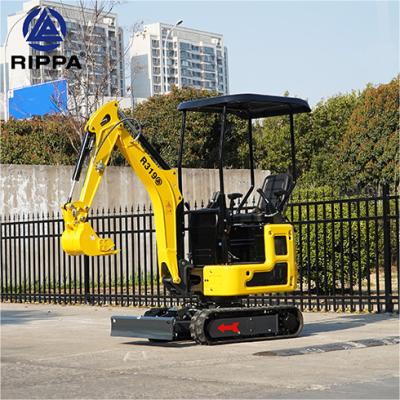
RIPPA is a Chinese construction machinery manufacturer serving international markets. Buyers researching Chinese mini excavator dealers can explore RIPPA's compact equipment range and contact the company for information about purchasing and dealer cooperation.
As with any supplier, confirm the specific product offering, quotation, delivery arrangements, documentation, and support available for your destination.
Frequently Asked Questions
Are Chinese mini excavator dealers all manufacturers?
No. Some are manufacturers, while others are exporters, trading companies, or distributors. Verify the company's role before ordering.
What is the most important factor when comparing suppliers?
There is no single factor for every buyer. Manufacturer credibility, product suitability, total landed cost, parts support, and delivery requirements should be assessed together.
Should I request a sample order?
For some businesses, an initial smaller order may help evaluate product quality and the supplier's process before expanding purchases. The appropriate approach depends on the product, commercial terms, and business requirements.
Conclusion
The best way to compare Chinese mini excavator dealers is to use a consistent supplier evaluation process.
Verify the manufacturer, review product documentation, compare total purchasing costs, clarify shipping responsibilities, and confirm parts and after-sales procedures.
For B2B buyers, these steps provide a stronger basis for choosing a supplier than an advertised price or an unverified online ranking.
Compare Your Mini Excavator Supply Options
Contact RIPPA to discuss compact equipment, international purchasing, and potential distributor cooperation.