Chinese Skid Steer Loader Manufacturer: How to Evaluate a Factory Before Importing
Chinese Skid Steer Loader Manufacturer: How to Evaluate a Factory Before Importing
China has become an important sourcing destination for international construction equipment buyers. For importers and equipment dealers, working with a Chinese skid steer loader manufacturer can provide access to different product options and manufacturing supply chains.
However, choosing a factory requires more than comparing quotations. Buyers need to understand the manufacturer's actual production capabilities, product range, quality management, export experience, and communication process.
This guide explains how international buyers can evaluate a Chinese skid steer loader manufacturer before starting a purchasing relationship.
Why Do International Buyers Source Skid Steer Loaders from China?
Chinese manufacturers serve different international markets and offer construction equipment for various applications.
For importers, distributors, and dealers, sourcing from China may provide several potential advantages.
Access to Different Equipment Options
Manufacturers may offer different skid steer loader configurations for construction, agriculture, landscaping, and material handling.
A broader product selection allows dealers to compare equipment based on the needs of their local customers.
Direct Communication With Manufacturers
Working directly with a manufacturer can help buyers communicate product requirements, request quotations, discuss configurations, and coordinate orders.
It also gives buyers an opportunity to understand the factory's production and supply arrangements.
Opportunities for Long-Term Dealer Cooperation
For established equipment distributors, a manufacturer relationship can support future purchasing plans and product portfolio development.
However, the actual value of cooperation depends on product suitability, supplier performance, local demand, and commercial terms.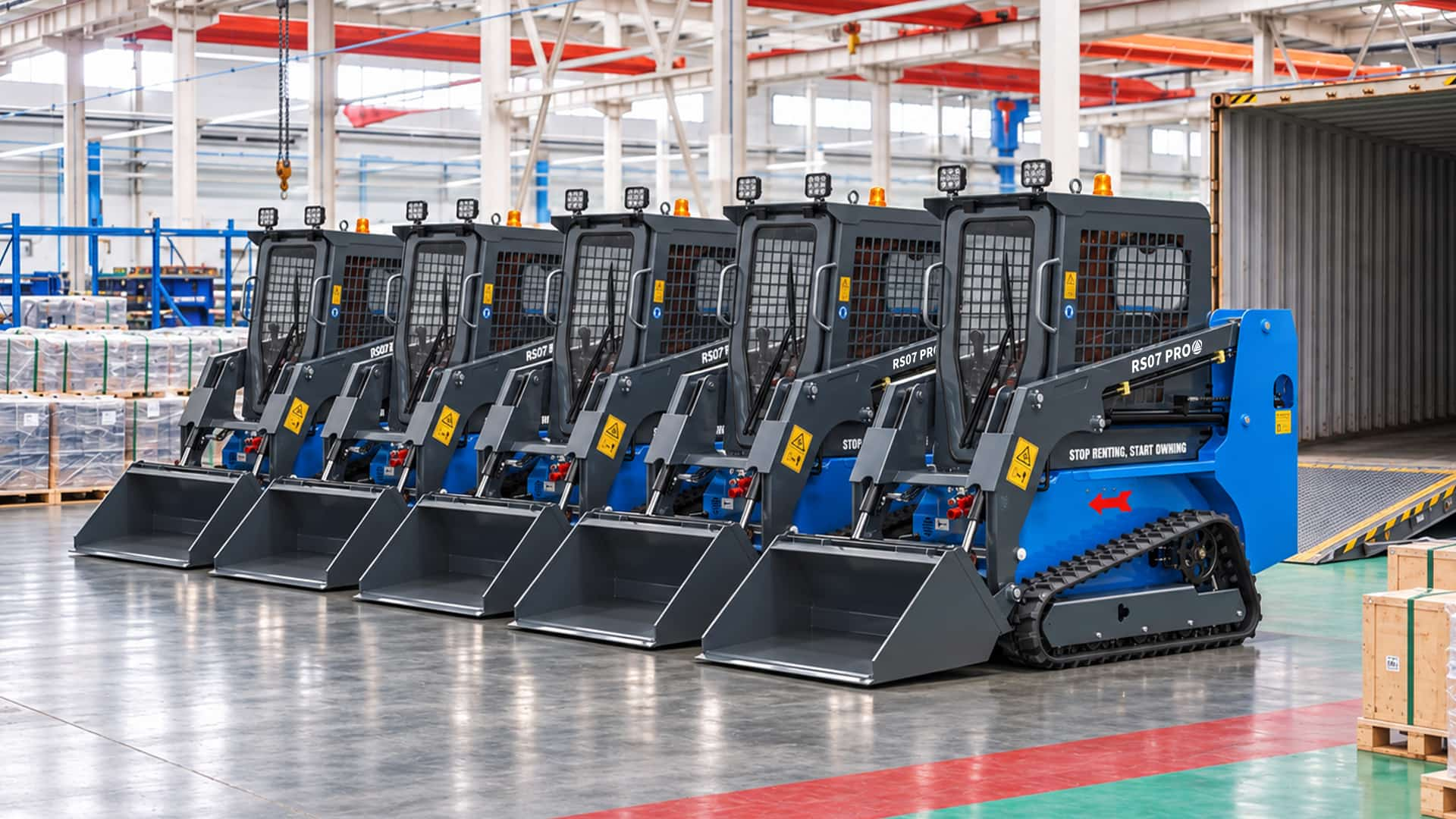
How to Verify a Chinese Skid Steer Loader Manufacturer
One of the most important steps in international sourcing is confirming who actually manufactures the equipment.
Check the Company's Official Website
Start with the manufacturer's official website.
Review the following information:
Company introduction and business history
Product categories and product pages
Factory and production information
Company contact details
Export markets and business activities
Available product documentation
The website should provide consistent company and product information.
Request Factory and Production Information
Buyers should ask the supplier for information that helps verify its manufacturing operations.
Useful materials may include:
Factory photographs and videos
Production process information
Equipment assembly information
Quality inspection procedures
Product identification and documentation
When possible, arrange a factory visit or a live video meeting to discuss production and business capabilities.
Distinguish Manufacturers From Trading Companies
A trading company may provide useful sourcing services, but buyers should understand its role in the supply chain.
Ask whether the company manufactures the equipment directly, works with partner factories, or acts as an export intermediary.
Knowing the supplier's actual position helps buyers understand responsibility for product information, production coordination, and after-sales communication.
What Product Information Should Buyers Compare?
A reliable purchasing decision requires clear product information.
Compare Equipment Applications
Different skid steer loaders may be designed for different working environments.
Before selecting a product, consider:
Construction and material handling requirements
Landscaping and agricultural applications
Working space and ground conditions
Required attachments
Transportation arrangements
The right machine should match the intended application rather than simply having the lowest quotation.
Review Available Configurations
Ask the manufacturer to provide a detailed product configuration list.
Buyers should compare the relevant components, operating systems, attachment compatibility, and optional equipment.
Do not compare two quotations without confirming that their configurations are equivalent.
Request Product Documentation
International buyers should ask for relevant product documents before placing an order.
These may include product catalogs, operating manuals, packing information, invoices, and other documents required for the destination market.
The exact documents depend on the equipment and import requirements of the destination country.
Evaluate the Manufacturer's Export Capabilities
A factory that manufactures equipment may not necessarily have sufficient experience handling international orders.
Ask About Previous Export Markets
Discuss the manufacturer's experience with your destination country or region.
Ask whether it has experience coordinating international shipments, preparing export documents, and communicating with overseas customers.
Confirm Shipping and Packaging Arrangements
Before ordering, clarify:
Packaging method
Container loading arrangements
Shipping terms
Estimated production schedule
Required export documents
Responsibility for freight and customs procedures
The buyer and supplier should clearly agree on these details before confirming the order.
Understand Communication and Parts Support
For international dealers, communication after delivery is also important.
Ask how the manufacturer handles parts identification, technical questions, and replacement component inquiries.
A clear communication process can help reduce misunderstandings during long-term cooperation.
Questions to Ask Before Choosing a Chinese Skid Steer Loader Factory
Before making a final decision, buyers can use the following checklist:
Are you the actual manufacturer or an export intermediary?
What skid steer loader products are currently available?
Can you provide detailed product configurations?
What attachments are compatible with the equipment?
Which export markets have you served?
What documents can you provide for international orders?
How are spare parts inquiries handled?
What are your order, payment, and shipping terms?
Can you provide factory information or arrange a video meeting?
What cooperation options are available for overseas dealers?
Clear answers to these questions help buyers evaluate suppliers more effectively.
Frequently Asked Questions
How do I find a Chinese skid steer loader manufacturer?
Search for manufacturers with official company websites, identifiable factory information, clear product catalogs, and verifiable business contact details. Request factory information and product documentation before purchasing.
What is the difference between a manufacturer and a supplier?
A manufacturer produces equipment, while a supplier may manufacture products directly or source them from other factories. Buyers should confirm the company's actual role before placing an order.
Can I import skid steer loaders directly from China?
International buyers can contact Chinese manufacturers to discuss direct purchasing. Import procedures, required documents, taxes, and shipping arrangements depend on the destination country.
What should dealers consider when choosing a Chinese factory?
Dealers should evaluate product suitability, manufacturing capabilities, product documentation, export experience, communication, parts arrangements, and long-term cooperation terms.
Should I choose a supplier based only on price?
No. Buyers should compare product configurations, supplier capabilities, shipping arrangements, documentation, and parts support. A quotation should be evaluated as part of the overall purchasing decision.
Contact RIPPA About Skid Steer Loader Manufacturing and Supply
For international equipment buyers, choosing the right manufacturer is the first step toward building a stable supply relationship.
RIPPA serves overseas construction equipment customers and business partners. Contact the RIPPA team to request product information, discuss purchasing requirements, and explore potential dealer cooperation.