Off-Road Forklift: What Buyers Should Check for Uneven Terrain
Moving heavy materials across uneven ground is a common challenge on construction sites, farms, industrial yards, and outdoor work areas. Standard warehouse forklifts are primarily designed for relatively smooth surfaces, while outdoor material handling often requires equipment suited to changing ground conditions.
An off-road forklift is designed for material handling in outdoor environments where surfaces may include gravel, compacted soil, dirt roads, and other uneven terrain. Its suitability depends on factors such as tire configuration, ground clearance, stability, load requirements, and site accessibility.
For contractors, agricultural businesses, and equipment distributors, choosing the right rough terrain forklift means evaluating the actual working environment rather than focusing only on lifting capacity or purchase price.
What Is an Off-Road Forklift?
An off-road forklift is a material handling machine intended for outdoor operations and ground conditions that may be unsuitable for conventional warehouse forklifts.
Depending on the machine design, it may feature larger tires, a chassis designed for outdoor applications, and configurations intended to handle less predictable surfaces.
These characteristics make off-road forklifts relevant to businesses that need to move materials between outdoor storage areas, construction zones, agricultural facilities, and industrial workspaces.
However, not every outdoor forklift is suitable for every type of terrain. Buyers should review the manufacturer's specifications and confirm whether the equipment matches their actual operating conditions.
Where Are Off-Road Forklifts Commonly Used?
Different industries have different material handling requirements. Understanding the application helps buyers identify the most suitable machine configuration.
Construction Sites
Construction sites frequently require the movement of building materials, equipment supplies, pallets, and other loads.
Uneven ground, loose soil, and temporary access roads can make material handling more challenging.
An appropriate off-road forklift can support material transportation and organization in outdoor working areas, provided the machine is suitable for the ground conditions and load requirements.
Agricultural Operations
Farms and agricultural facilities often have outdoor storage areas, dirt roads, and open working spaces.
Off-road forklifts may be used to move packaged agricultural products, supplies, equipment, and other materials between storage and operational areas.
Buyers should consider the condition of farm roads, the presence of slopes, and the type of loads handled throughout the working day.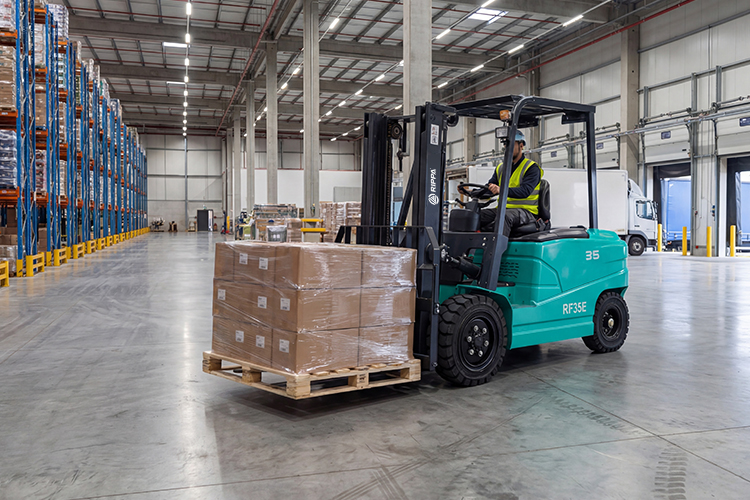
Lumber Yards and Building Material Storage
Lumber yards, building material suppliers, and outdoor warehouses often handle bulky materials that need to be moved between storage locations.
In these environments, businesses should evaluate lifting requirements, fork dimensions, visibility, and the available turning space.
Industrial Outdoor Storage Areas
Some industrial facilities operate outdoor material storage zones where ground conditions vary across different sections.
An off-road forklift can be considered when material handling takes place on surfaces that require a more suitable outdoor machine configuration.
Five Factors to Consider When Choosing a Rough Terrain Forklift
Selecting a rough terrain forklift requires a clear understanding of both the equipment and the working environment.
1. Ground Conditions and Tire Selection
Ground conditions should be one of the first considerations.
Different surfaces create different traction and stability requirements.
For example:
Gravel surfaces may require tires suitable for loose materials.
Compacted soil may offer more consistent support.
Muddy ground can create traction and accessibility problems.
Uneven surfaces require careful evaluation of machine stability.
Buyers should discuss their typical operating surfaces with the manufacturer and confirm which tire configurations are available.
2. Load Capacity and Material Dimensions
The weight of the materials being handled is only one part of forklift selection.
Load dimensions, lifting height, load center, and attachment configuration can all affect the machine's rated capacity.
Buyers should provide realistic load information when requesting quotations.
It is important to check the manufacturer's rated load capacity under the intended operating configuration rather than assuming the maximum listed capacity applies to every lifting condition.
3. Stability on Uneven Ground
Outdoor environments may include slopes, depressions, loose surfaces, and changing ground levels.
Machine stability is essential when lifting and transporting materials.
Consider the machine's design, load distribution, ground conditions, and manufacturer operating guidelines.
Operators should follow approved procedures and avoid lifting loads on unsuitable slopes or unstable surfaces.
4. Working Space and Maneuverability
Construction sites and agricultural facilities do not always have the same layout as conventional warehouses.
Narrow access routes, obstacles, storage arrangements, and turning areas can affect daily operation.
Before purchasing, measure the available working space and compare it with the machine's dimensions and turning requirements.
5. Maintenance and Parts Availability
Outdoor material handling equipment may operate in dusty, muddy, or abrasive environments.
Regular inspection and maintenance are important for keeping equipment in working condition.
Ask suppliers about recommended maintenance schedules, replacement parts, service documentation, and parts ordering procedures.
For international buyers, the ability to obtain clear parts information is particularly important.
Off-Road Forklift vs Standard Warehouse Forklift
Although both machines are designed to lift and transport materials, their intended operating environments are different.
| Comparison | Off-Road Forklift | Standard Warehouse Forklift |
|---|---|---|
| Main application | Outdoor material handling | Indoor material handling |
| Typical surfaces | Gravel, soil, uneven outdoor areas | Smooth concrete floors |
| Tire configuration | Selected for outdoor conditions | Commonly designed for hard floors |
| Working environment | Construction sites, farms, yards | Warehouses and distribution centers |
| Main selection factors | Terrain, traction, stability | Aisle space, floor conditions, lifting requirements |
The right choice depends on where the machine will spend most of its working hours.
Businesses operating across both indoor and outdoor areas should evaluate whether separate equipment configurations are more appropriate for their workflow.
Questions to Ask Before Purchasing an Off-Road Forklift
For international equipment buyers and distributors, requesting the right information helps avoid configuration problems after delivery.
Before placing an order, consider asking the supplier:
What types of terrain is the forklift designed to handle?
Which tire configurations are available?
What are the rated load capacity and load center?
What lifting height options are available?
What safety features and operating documentation are provided?
Which maintenance procedures are recommended?
How can overseas customers obtain replacement parts?
What export packaging and shipping arrangements are available?
These questions help buyers compare suppliers based on practical product suitability rather than marketing descriptions alone.
How Dealers Can Evaluate an Off-Road Forklift Supplier
For equipment distributors, choosing a supplier involves more than selecting a product with competitive pricing.
A reliable manufacturer should be able to provide accurate product documentation, explain available configurations, and communicate clearly about export arrangements.
Dealers should pay particular attention to the following areas:
Product information: Confirm that the supplier provides current product catalogs, technical specifications, and configuration details.
Manufacturing capability: Understand the manufacturer's production background, product range, and ability to support business orders.
Parts information: Ask about commonly required replacement parts and overseas ordering procedures.
Export experience: Confirm that the supplier understands international packaging, shipping documentation, and destination-market requirements.
Long-term cooperation: Evaluate communication, order coordination, and the supplier's ability to support repeat purchasing.
These factors help distributors build a more dependable equipment supply network.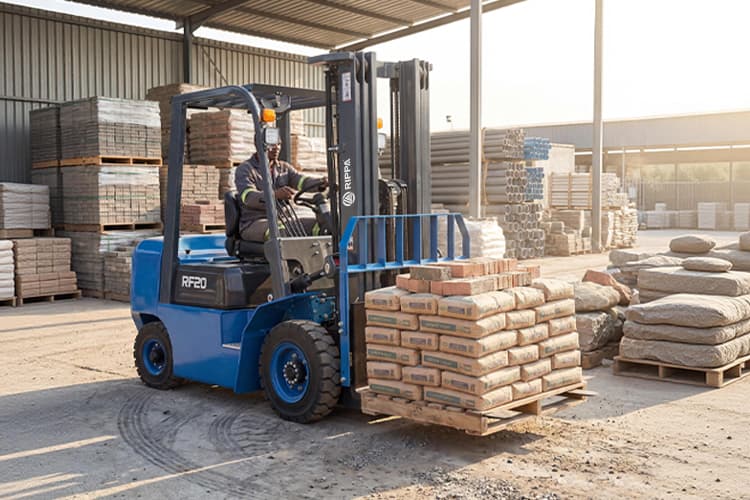
Frequently Asked Questions
What is the difference between an off-road forklift and a rough terrain forklift?
The terms are often used interchangeably to describe forklifts intended for outdoor material handling. However, buyers should check the actual machine design and manufacturer specifications instead of relying on the product name alone.
Can an off-road forklift work on muddy ground?
Suitability depends on tire configuration, ground conditions, machine design, load weight, and site accessibility. Deep mud or unstable ground may exceed the machine's intended operating conditions.
Are off-road forklifts suitable for construction sites?
They can be suitable for construction sites that require outdoor material handling. Buyers should evaluate terrain, load requirements, working space, and machine specifications before selecting a model.
What should buyers check before purchasing a rough terrain forklift?
Important considerations include tire configuration, rated load capacity, lifting height, stability, ground clearance, maintenance requirements, and replacement parts availability.
How can dealers choose the right off-road forklift manufacturer?
Dealers should evaluate manufacturing experience, product documentation, configuration options, export experience, parts information, and communication throughout the purchasing process.
Choose Equipment Based on Your Actual Working Conditions
An off-road forklift can be a valuable addition to businesses that regularly move materials across outdoor working areas.
However, selecting the right machine requires more than comparing prices and lifting capacity. Ground conditions, tire configuration, load characteristics, stability, and maintenance arrangements all influence equipment suitability.
For contractors, understanding these factors helps improve material handling decisions. For distributors, working with manufacturers that provide clear product information and dependable international communication can support long-term business development.
RIPPA Group focuses on construction machinery manufacturing and international supply. Businesses interested in exploring equipment categories and wholesale cooperation can contact RIPPA Group to discuss their purchasing requirements.