What Is a Skid Steer Loader Used For? Applications Across Industries
A skid steer loader is widely recognized as one of the most versatile machines in modern construction and industrial operations. Thanks to its compact structure and wide range of attachments, it can perform dozens of tasks that would otherwise require multiple types of equipment. Understanding its applications helps contractors, dealers, and buyers maximize return on investment.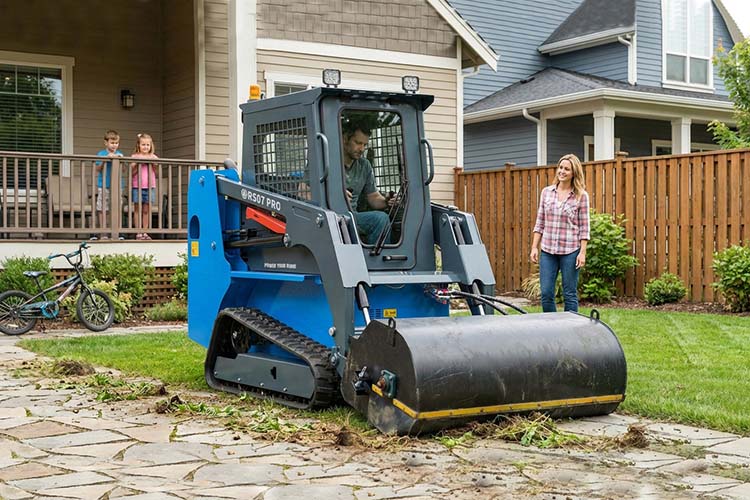
Core Uses of a Skid Steer Loader
Material Handling
One of the most common uses of a skid steer loader is moving materials. With a standard bucket or pallet forks, operators can efficiently transport:
Soil and sand
Gravel and aggregates
Construction debris
Palletized goods
Its compact size allows it to work effectively in confined spaces such as warehouses and urban construction sites.
Excavation and Digging
Although not a full excavator, a skid steer loader can handle light digging tasks when equipped with the right attachments, such as augers or trenchers. It is commonly used for:
Digging small foundations
Trenching for utilities
Fence post hole drilling
This makes it a cost-effective alternative for smaller projects.
Construction Industry Applications
Site Preparation
Skid steer loaders are ideal for clearing land, leveling surfaces, and preparing construction sites. They can remove debris, grade soil, and assist in foundation work.
Demolition Support
With attachments like hydraulic breakers or grapples, skid steers can assist in light demolition tasks, including breaking concrete and removing waste materials.
Road Work
They are frequently used for road maintenance, asphalt work, and patch repairs, especially in areas where larger machinery cannot operate.
Agriculture and Farming
Feeding and Cleaning
Farmers use skid steer loaders to transport feed, clean barns, and handle manure efficiently.
Land Management
They are useful for clearing brush, digging irrigation channels, and maintaining farm roads.
Bale Handling
With specialized attachments, skid steers can lift and move hay bales, improving farm productivity.
Landscaping and Property Maintenance
Ground Leveling and Grading
Landscape contractors rely on skid steers for precise grading and soil preparation.
Tree and Stump Removal
Using stump grinders or grapples, operators can remove trees and roots effectively.
Snow Removal
Equipped with snow blades or blowers, skid steer loaders are widely used for clearing snow in parking lots, sidewalks, and driveways.
Industrial and Municipal Uses
Warehouse Operations
Skid steers can move goods in tight indoor spaces, making them useful for logistics and storage facilities.
Municipal Maintenance
City services use them for street cleaning, waste handling, and infrastructure maintenance.
Emergency Response
In disaster situations, skid steer loaders help clear debris and restore access quickly.
Advantages in Multi-Application Use
Attachment Versatility
A single machine can replace multiple pieces of equipment by switching attachments.
Cost Efficiency
Lower purchase and maintenance costs compared to owning several specialized machines.
Space Adaptability
Perfect for both indoor and outdoor environments.
Choosing the Right Configuration
When selecting a skid steer loader for specific applications, consider:
Hydraulic capacity for advanced attachments
Rated operating capacity for lifting tasks
Tire or track type based on terrain
Attachment compatibility
Conclusion
A skid steer loader is far more than a simple construction machine—it is a multi-functional tool capable of adapting to a wide range of industries and tasks. From construction and agriculture to landscaping and municipal work, its versatility makes it an essential asset for businesses seeking efficiency and flexibility.