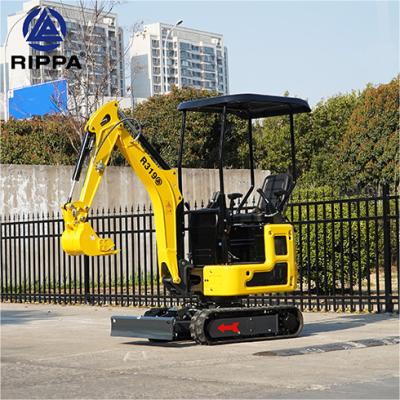
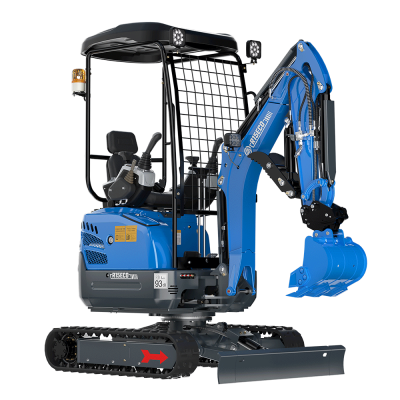
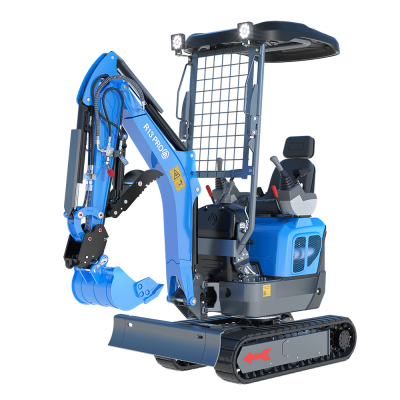
Mini Skid Steers & Attachments in Action: Real-World Applications, Smart Rigging, and Performance Insights
Mini skid steers (often referred to as compact utility loaders) are no longer just "support" equipment. They have evolved into the backbone of modern contracting, landscaping, and property maintenance. Defined by their compact footprint, high power-to-weight ratios, and hydraulic versatility, these machines thrive where traditional heavy iron fails: the tight, the narrow, and the interior.
This report moves beyond the standard buyer’s guide to explore real-world deployment strategies, attachment synergy, and operational tactics that maximize ROI in the field.
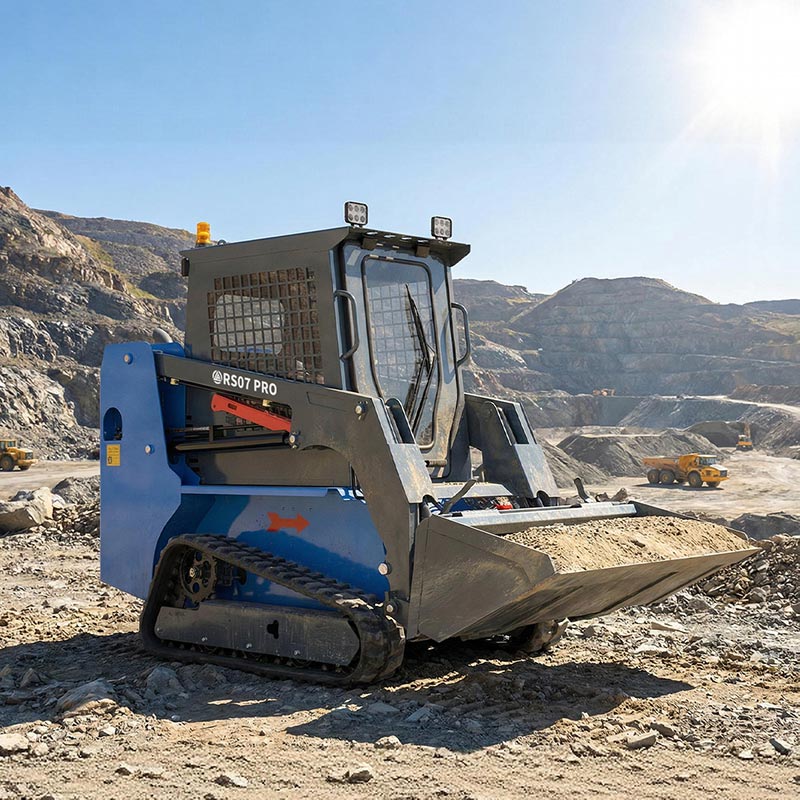
Why Mini Skid Steers Dominate the Modern Jobsite
The shift toward "micro-mechanization" is driven by the need for agility and precision. As urban density increases and labor costs rise, the mini skid steer offers a solution that balances muscle with a minimal footprint.
Key Advantages for the Modern Contractor
Logistical Ease: Can be transported via standard utility trailers or even in the beds of some heavy-duty pickups.
Operational Efficiency: Drastically lower fuel consumption and overhead compared to full-sized loaders.
Surface Sensitivity: Low ground pressure minimizes damage to established turf or decorative pavers.
Rapid Changeovers: Quick-attach systems allow one operator to switch functions in under 60 seconds.
High-Demand Sectors
Residential Landscaping & Hardscaping
Municipal & Park Maintenance
Interior Demolition & Renovation
Underground Utility Installation
Real-World Scenarios: Maximizing Workflow Efficiency
Success isn't about the machine’s horsepower; it’s about how it shortens the "Path to Completion." Here is how these machines perform in common high-stakes environments:
1. Residential Landscape Transformation
Config: GP Bucket + Auger + Soil Conditioner
Execution: The operator clears old sod, bores fence post holes, and grades the site for new seed—all with one machine.
Insight: One operator can replace a three-person manual crew, completing a multi-day prep job in a single afternoon.
2. Interior Demolition & Site Clearing
Config: Hydraulic Breaker + Grapple
Execution: Navigating through standard 36-inch doorways to break concrete slabs and haul debris out to a waiting skip.
Insight: Eliminates "bucket-and-barrow" manual labor, significantly reducing the risk of crew fatigue and injury.
3. Urban Utility Installation
Config: Trencher + Backfill Blade
Execution: Precision trenching for fiber optics or irrigation in narrow alleys where a backhoe cannot maneuver.
Insight: Faster cycle times in congested areas with zero disruption to neighboring traffic.
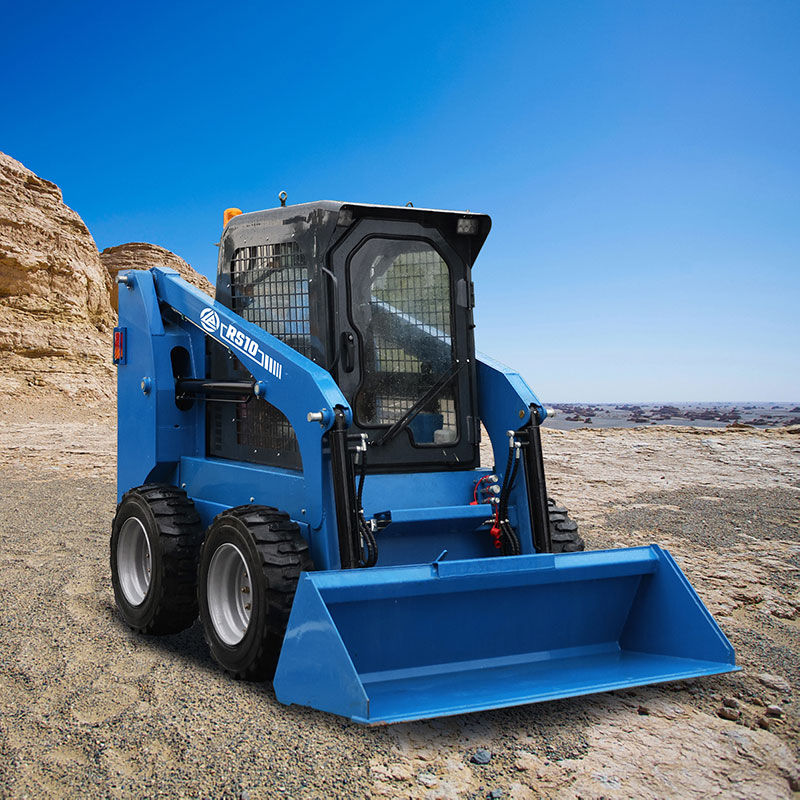
The Attachment Strategy: Production Multipliers
The machine is simply the power plant; the attachment does the work. Choosing the right combo is the difference between profit and "just getting by."
| Priority Tools | Best For... |
| Augers | Fencing, deck footings, and tree planting. |
| Pallet Forks | Unloading deliveries in tight residential driveways. |
| Brush Cutters | Clearing overgrowth on steep or narrow embankments. |
| Snow Blowers | Clearing walkways where trucks cannot reach. |
Pro Tip: Always match your attachment’s hydraulic requirements ($L/min$ or $GPM$) to the machine’s auxiliary output. Over-driving a small attachment or under-powering a large one leads to premature failure.
Operational Intelligence: Efficiency & Safety
Strategic operation extends the life of the machine and improves jobsite safety.
Plan the Flow: Map out material staging areas to minimize travel distance. Every "dead-head" (traveling empty) is wasted fuel and time.
Load Balancing: When carrying heavy loads (like rock or wet soil), keep the attachment low to the ground to maintain a low center of gravity.
Surface Awareness: Use rubber tracks for finished surfaces and aggressive treads for mud/clay to prevent unnecessary spinning and wear.
Comparative Perspective: Mini vs. Standard Skid Steer
| Task Requirement | Mini Skid Steer | Standard Skid Steer |
| Tight Access | Superior (fits through gates) | Limited |
| Lifting Capacity | 500 – 1,500 lbs | 2,000 – 4,000+ lbs |
| Operator Visibility | Excellent (Stand-on) | Restricted (Cabin) |
| Transport | Light Trailer/Pickup | Heavy Haul Trailer |
Maintenance for Longevity
The high-pressure hydraulic systems in mini loaders require disciplined upkeep.
Hydraulic Integrity: Check hoses for "weeping" or abrasions daily. Even a pinhole leak can lead to a system-wide failure under load.
Cooling System: Because these machines are compact, cooling fans can clog easily. Clean the radiator screens weekly.
Undercarriage: Tension tracks according to manufacturer specs—too loose and they throw; too tight and they sap power and fuel.