Skid Steer vs. Compact Track Loader (CTL): The Ultimate 2026 Buyer’s Guide
Choosing between a Skid Steer Loader (SSL) and a Compact Track Loader (CTL) is one of the most consequential decisions for a modern contractor. While they share similar DNA and attachment compatibility, their operational "sweet spots" are worlds apart. This guide moves beyond technical specs to evaluate Total Cost of Ownership (TCO), terrain performance, and strategic selection.
Core Differences: Wheels vs. Tracks
The fundamental distinction lies in how the machine interfaces with the ground.
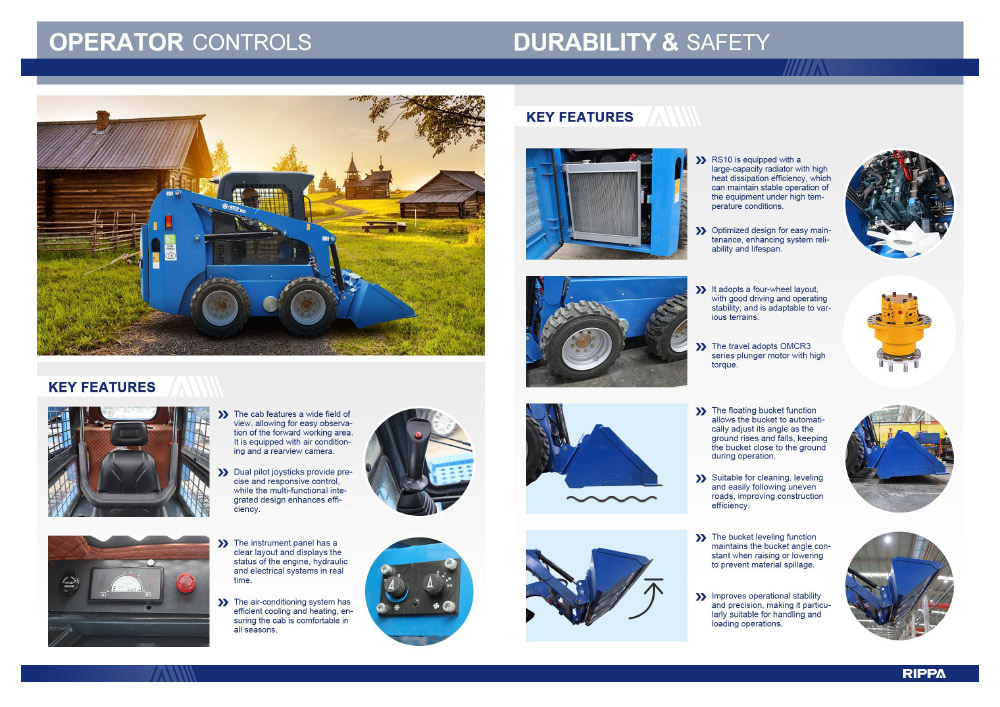
Skid Steer (SSL): A compact, wheeled machine built for agility, high speed on hard surfaces, and cost-efficiency.
Compact Track Loader (CTL): Equipped with high-flotation rubber tracks, designed for superior traction, stability, and "pitting" power in soft or uneven terrain.
Key Comparison Table
| Feature | Skid Steer Loader (SSL) | Compact Track Loader (CTL) |
| Primary Surface | Asphalt, Concrete, Hard Dirt | Mud, Sand, Slopes, Soft Turf |
| Mobility | Faster travel speeds | Slower, but better "push" |
| Ground Pressure | High (concentrated at 4 points) | Low (distributed across tracks) |
| Initial Cost | Lower | Higher (approx. 15-25% more) |
| Maintenance | Simpler (Tires) | Complex (Undercarriage/Tracks) |
When to Choose a Skid Steer (Wheeled)
The skid steer remains the king of the urban jobsite and the paved yard.
Best-Fit Applications
Snow Removal: Faster travel between parking lots and better "spin" for tight turns.
Demolition: Solid tires or foam-filled tires are immune to the rebar and glass that destroy rubber tracks.
Roadwork: Ideal for milling, patching, and sweeping on abrasive asphalt.
Indoor Projects: Higher maneuverability in warehouses and parking structures.
The Advantage: If you work on hard, abrasive surfaces, tires are significantly cheaper to replace than tracks.
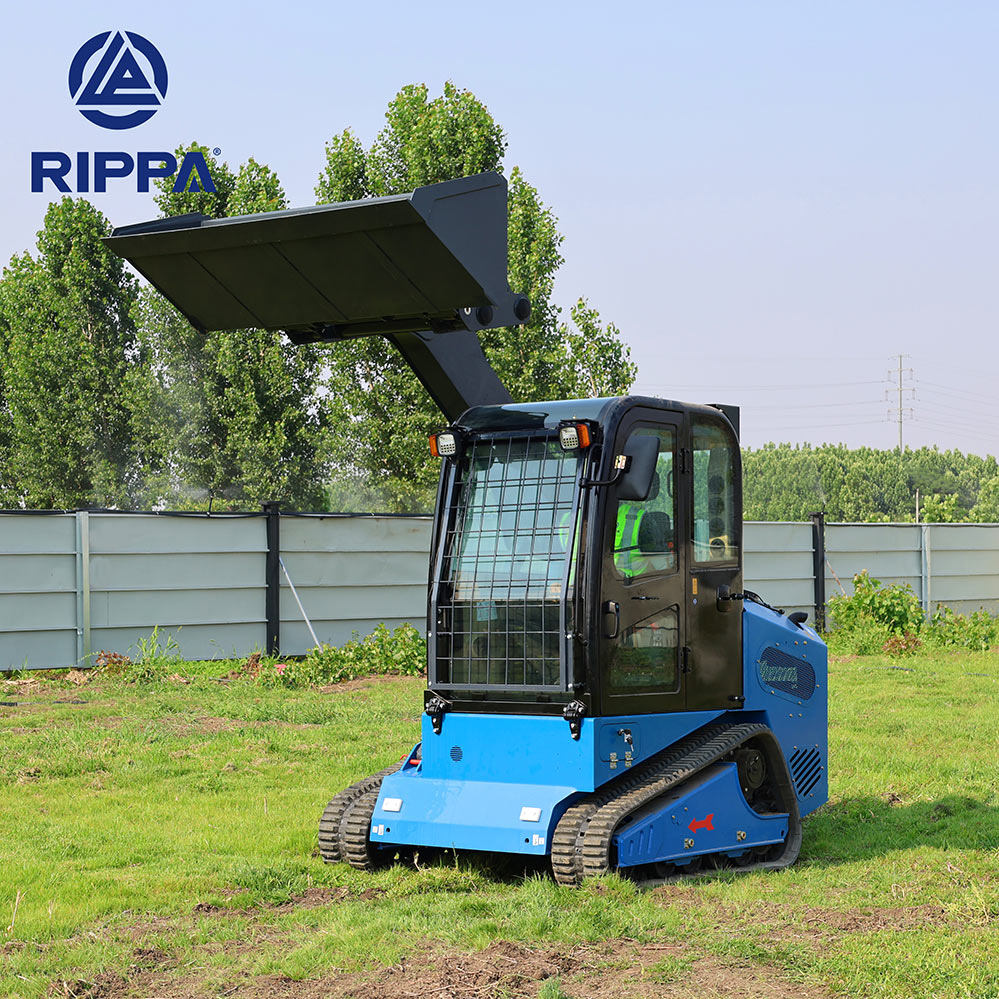
When to Choose a Compact Track Loader (CTL)
The CTL has surged in popularity because it extends the working season—allowing crews to work in conditions that would bog down a wheeled machine.
Best-Fit Applications
New Construction/Earthmoving: Operates on wet, "virgin" soil without getting stuck.
Landscaping: Low ground pressure ($3-5$ PSI) means less damage to delicate lawns and less restoration work.
Grading & Forestry: The larger footprint provides a more stable platform for precision grading and heavy-duty mulching.
Sloped Terrain: Tracks provide significantly better "bite" on inclines, increasing operator safety.
The Advantage: A CTL can often work the day after a rainstorm, whereas a skid steer might have to wait for the site to dry.
The Power of Attachments
Both machines serve as "Swiss Army Knives" on the jobsite. However, certain attachments pair better with specific platforms:
SSL Favorites: Sweepers, cold planers, snow pushers, and pallet forks.
CTL Favorites: Brush cutters, forestry mulchers, dozer blades, and heavy-duty trencher.
Selection Tip: Ensure the machine’s Auxiliary Hydraulic Flow (Standard vs. High Flow) matches the requirements of your most expensive attachments (e.g., a cold planer usually requires High Flow).
Total Cost of Ownership (TCO) & Maintenance
The "hidden" costs are where many buyers make mistakes.
1. Maintenance Realities
Undercarriage: A CTL undercarriage has many moving parts (rollers, idlers, sprockets). These must be cleaned daily to prevent premature wear.
Replacement Costs: A set of premium tracks can cost $3,000–$5,000+, while a set of tires is often under $1,000.
2. Operational Costs
Fuel: CTLs generally consume more fuel due to the added weight and friction of the track system.
Utilization: A CTL often sees higher utilization because it isn't sidelined by weather, which can lead to a faster ROI despite higher costs.
Pro Selection Tips: Questions to Ask Before You Buy
What is my 80% surface? Do you spend 80% of your time on dirt or 80% on pavement?
What is my transport limit? CTLs are heavier; ensure your truck and trailer can legally haul the extra weight.
Do I need "float" or "bite"? If you need to stay on top of soft mud, go CTL. If you need to "dig in" to hard-packed gravel, a wheeled SSL might be better.
Local Support: Is there a dealer nearby who can service track systems quickly? Down-time is the ultimate profit killer.