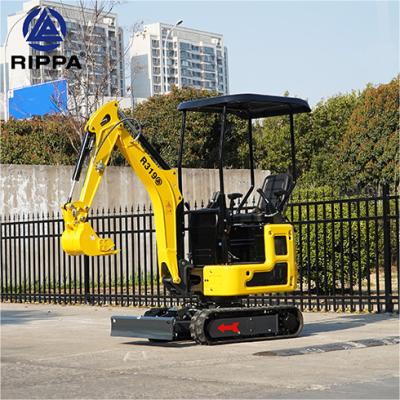
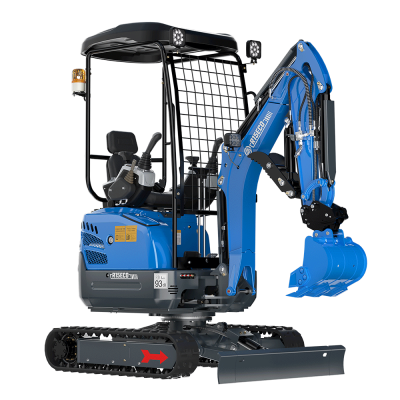
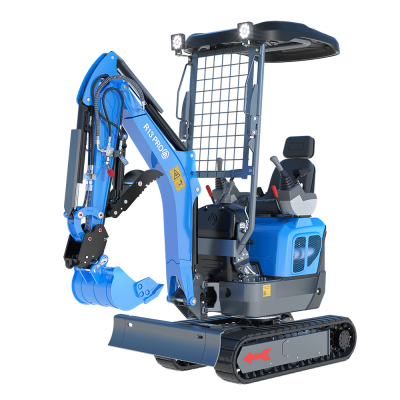
Skid Steer vs. Compact Tractor Loader Backhoe: Choosing the Right Powerhouse for Your Project
In the demanding worlds of construction, landscaping, and utility engineering, selecting the correct equipment is the ultimate pivot point for operational efficiency and site productivity. Skid steers and compact tractor loader backhoes (TLBs) stand as two of the most versatile machines found on modern jobsites. While they share certain functional overlaps and occasionally use interchangeable attachments, each machine possesses a distinct engineering DNA tailored to specific operational demands. Understanding these nuances is essential for contractors who need to balance raw power with surgical precision.
A compact tractor loader backhoe (TLB) is defined by its integrated dual-functionality, typically featuring a front-loading bucket and a rear-mounted digging arm. These machines generally operate under 80 horsepower and offer digging depths of up to 12 feet. What sets the TLB apart is not just its capacity but its footprint and mobility; it is designed to be agile enough for sensitive or confined workspaces while providing enough stability for significant excavation. Municipalities frequently prioritize TLBs because they can travel relatively quickly between disparate task locations on a single site without the need for constant trailering.
Furthermore, TLBs offer a distinct advantage regarding ground preservation. Unlike the aggressive pivoting action of a skid steer, the wheeled configuration of a compact backhoe is significantly gentler on turf and established landscapes. This makes them the premier choice for utility repairs in residential neighborhoods or municipal park maintenance where minimizing surface disruption is as important as the repair itself. While they may require more vertical and horizontal clearance than a skid steer, their ability to switch from loading to trenching without a single attachment change offers a continuous workflow that is hard to replicate.

Engineering Versatility and Maneuverability of the Skid Steer
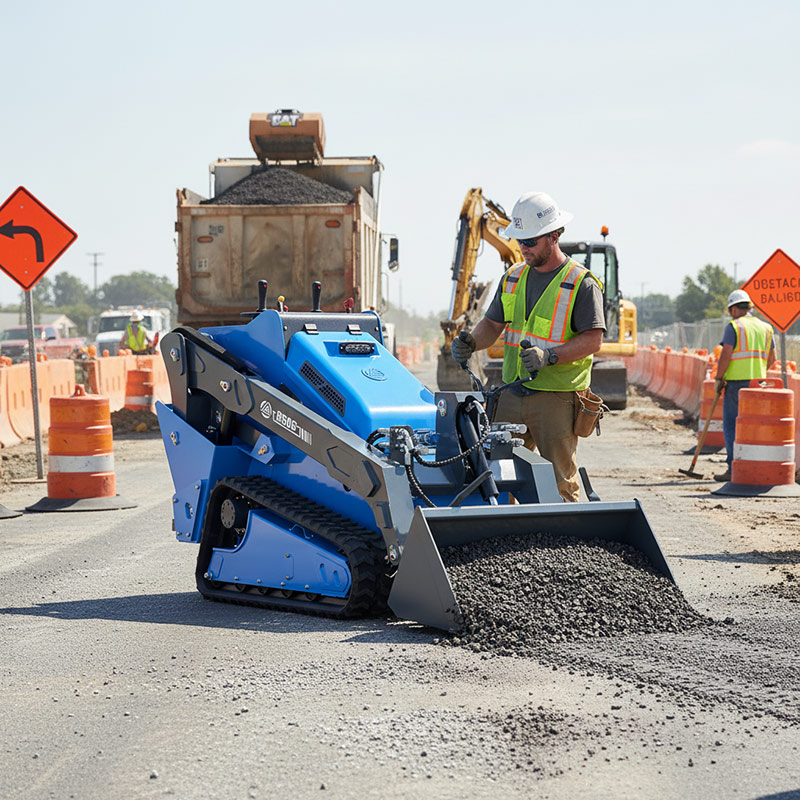
The skid steer loader is essentially a high-torque, compact power unit designed to be the ultimate multi-tool of the construction site. Its most defining characteristic is its unique steering system, which allows the machine to pivot 360 degrees within its own footprint. This zero-turn capability makes the skid steer the undisputed king of tight spaces, such as indoor demolition sites, narrow residential side yards, or complex urban utility corridors. Available in small, medium, and large frame sizes, these machines can be scaled to fit everything from light landscaping to heavy-duty earthmoving and land clearing.
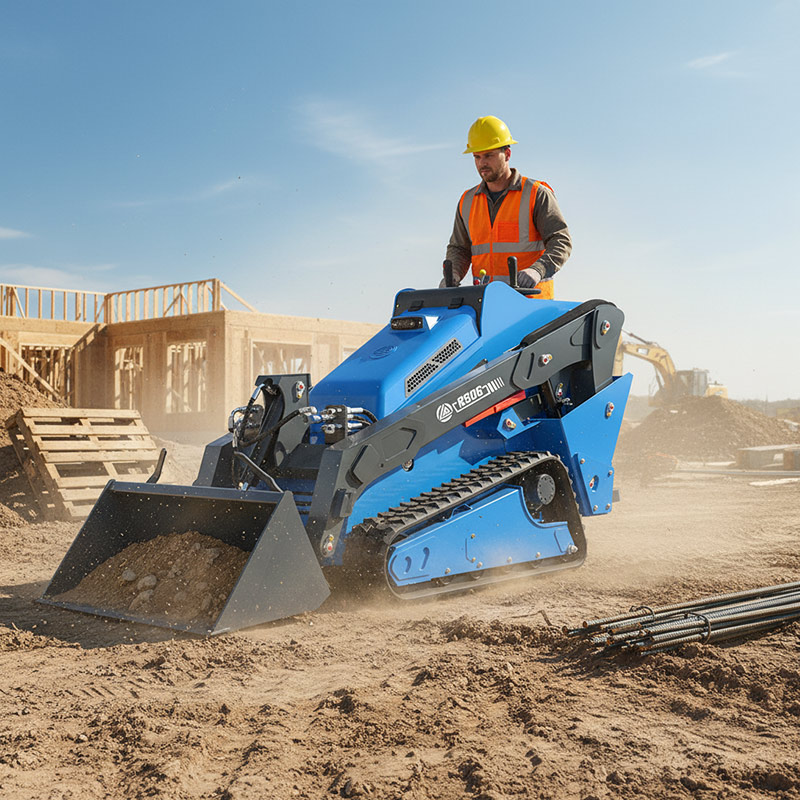
What truly elevates the skid steer in the eyes of landscaping and construction professionals is its unparalleled attachment ecosystem. With a standard quick-attach interface, a single machine can be transformed within minutes into a trencher, a pallet fork, an auger, or a hydraulic breaker. This versatility means that a contractor can use a medium-sized skid steer (50-70 HP) to grade a driveway in the morning, dig post holes for a fence at noon, and move heavy pallets of sod in the afternoon. For projects where the task list is diverse and the workspace is restricted, the skid steer’s adaptability ensures that no other machine is left idling on the sidelines.
When comparing practical application, the skid steer excels in scenarios where transportation efficiency and multi-tasking are paramount. Because of its compact dimensions, it is easily loaded onto smaller trailers, allowing for rapid deployment across multiple residential sites in a single day. While a skid steer equipped with a backhoe attachment can certainly perform excavation, its primary strength lies in its "skid" movement and high-flow hydraulic output, which powers demanding tools like brush cutters or cold planers more effectively than most compact tractors.
Strategic Decision Factors for Equipment Selection
Choosing between a skid steer and a compact TLB requires a strategic evaluation of the jobsite environment and the specific goals of the project. If your workspace is characterized by narrow access points or requires frequent, rapid changes between highly specialized tools, the skid steer is the superior investment. Its ability to navigate "un-navigatable" spaces ensures that labor hours are spent on production rather than manual digging or clearing. Conversely, for projects involving open spaces where protecting the ground surface is a priority, the compact TLB provides a more stable and "turf-friendly" solution.
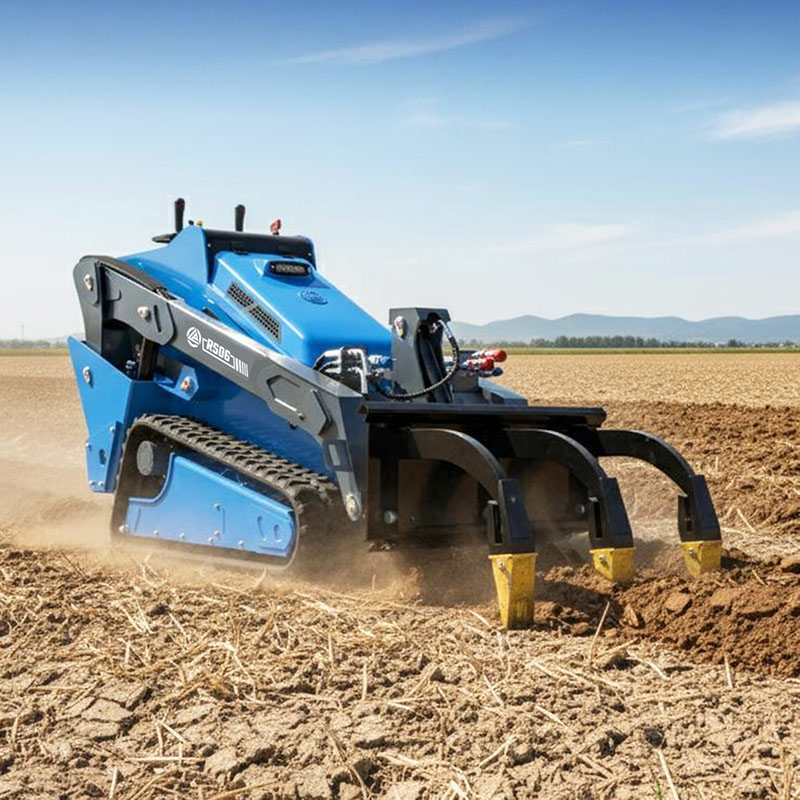
Time efficiency also plays a major role in the selection process, particularly regarding "attachment downtime." The TLB is a permanent multi-tasker; the operator simply rotates the seat to move from loader work to excavation work. This is ideal for roadside utility projects where a worker must dig a small hole, repair a pipe, and backfill it immediately. On the other hand, the skid steer is the better choice for high-volume material handling and specialized tasks like stump grinding or snow removal, where the machine stays in one configuration for several hours to maximize throughput.
Ultimately, the decision hinges on site accessibility, surface sensitivity, and task variety. Large-scale developers often prefer the TLB for its speed in moving between lots in a housing development, while residential landscapers and interior demolition crews rely on the skid steer for its surgical maneuverability. By assessing these core factors—maneuverability, attachment needs, and transport requirements—contractors can select the machine that minimizes downtime and maximizes the return on investment for their specific equipment fleet.