What Is a Rippa Mini Excavator and How Does It Work?
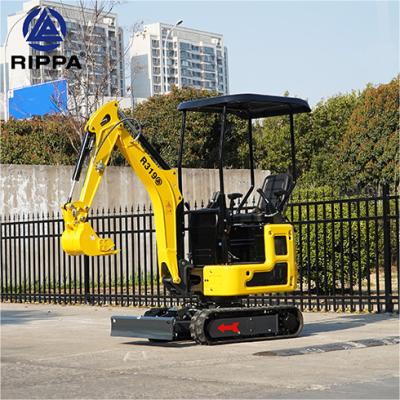
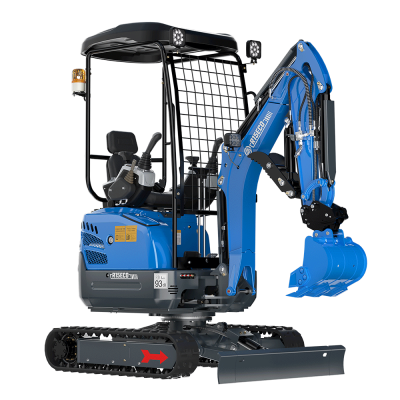
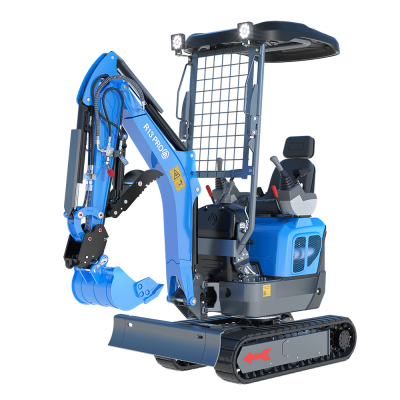
A Rippa mini excavator is a compact hydraulic machine designed for construction, landscaping, agriculture, utility installation, and property maintenance. It combines a tracked undercarriage, rotating upper structure, boom, arm, bucket, and hydraulic system in a size suitable for confined job sites.
For contractors and equipment buyers, its main advantage is the ability to dig, grade, lift, backfill, and operate different attachments where a larger excavator may be difficult or expensive to use.
How Does a Rippa Mini Excavator Work?
The engine supplies power to hydraulic pumps, which move pressurized fluid through control valves to the machine’s cylinders and travel motors. When the operator moves a joystick or control lever, hydraulic flow is directed to the boom, arm, bucket, blade, swing system, or tracks.
The boom raises and lowers the working equipment, while the arm controls reach. The bucket curls inward to penetrate and retain soil. These components work together to create a controlled digging cycle.
The upper structure can rotate, allowing the operator to excavate and discharge material without constantly repositioning the undercarriage. The tracks distribute the machine’s weight across the ground, supporting movement on soil, gravel, and uneven surfaces.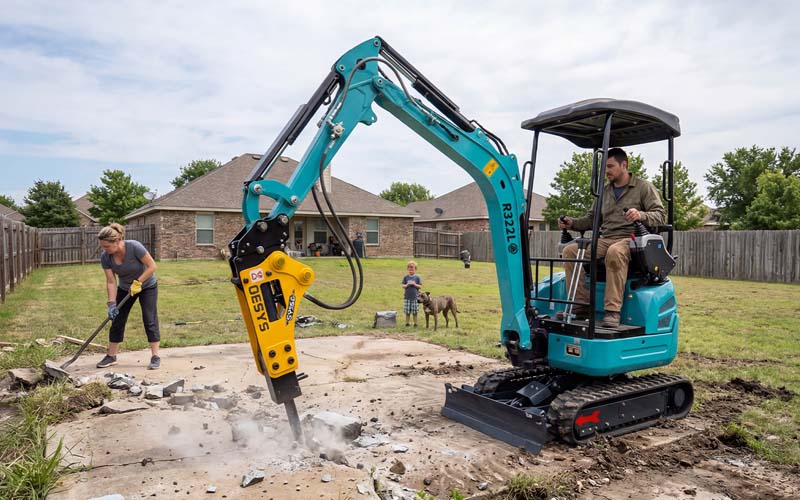
What Jobs Can It Perform?
A Rippa mini excavator can be used to:
Dig utility and drainage trenches
Prepare small foundations
Remove roots and small stumps
Backfill excavated areas
Shape gardens and landscapes
Clean farms and livestock areas
Assist with demolition and material handling
The front blade can support light grading, backfilling, and machine stabilization when used according to the operator’s manual.
Its working range can also be expanded with compatible attachments. Depending on the selected model, buyers may consider different buckets, hydraulic breakers, augers, grapples, rakes, or other tools.
Attachment weight, pin dimensions, hydraulic requirements, and coupler type must match the machine. Visual similarity alone does not confirm compatibility.
How to Choose the Right Machine
Begin with the intended application rather than choosing only by machine size. Buyers should evaluate digging depth, working reach, entrance width, ground conditions, lifting requirements, transportation limits, and expected operating hours.
A compact model may be more suitable for gardens, indoor renovation, farms, or narrow residential sites. A heavier model may offer greater stability and working capability for demanding construction jobs.
B2B buyers should also review:
Spare-parts availability
Warranty coverage
Service response
Operator and maintenance manuals
Attachment supply
Training support
Destination-market compliance
Specifications and certifications can differ between models and markets. Buyers should therefore confirm all information through the latest brochure, quotation, and model-specific documents.
Understanding how a Rippa mini excavator works makes selection easier: the engine supplies power, the hydraulic system controls movement, and the undercarriage provides mobility and support. Matching these systems to the actual application helps reduce downtime and improves long-term equipment value.