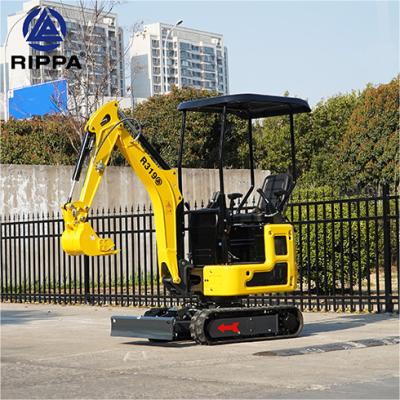
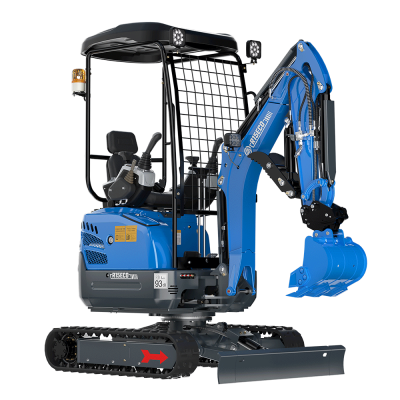
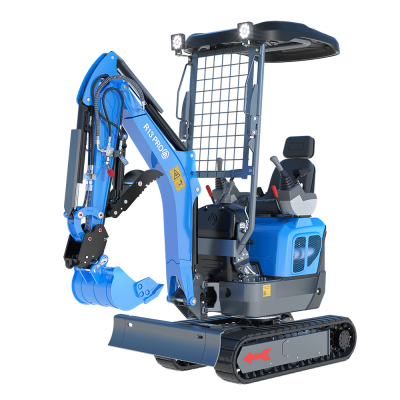
Rippa Mini Excavator Specifications Explained: Everything Buyers Need to Know
Rippa mini excavator specifications help buyers evaluate job capability, transportation requirements, attachment compatibility, and operating cost. However, individual figures should be read as parts of a complete system rather than isolated selling points.
Specifications vary between models and configurations. Buyers should always consult the latest official brochure and quotation for the exact machine under consideration.
Machine Dimensions and Transportation
Overall width, height, and length determine whether the excavator can pass through gates, operate beside buildings, fit inside a shipping container, or travel on a particular trailer.
Buyers should clarify whether the listed width includes the blade and whether an adjustable undercarriage is measured in its retracted or extended position.
Weight descriptions also require attention. The following terms may represent different conditions:
Operating weight
Machine weight
Shipping weight
Weight with attachments
Weight with a cab or canopy
Fuel, buckets, optional equipment, and machine configuration can affect the final transport load. Confirm the complete transported weight against the trailer, vehicle, axle, and local licensing limits.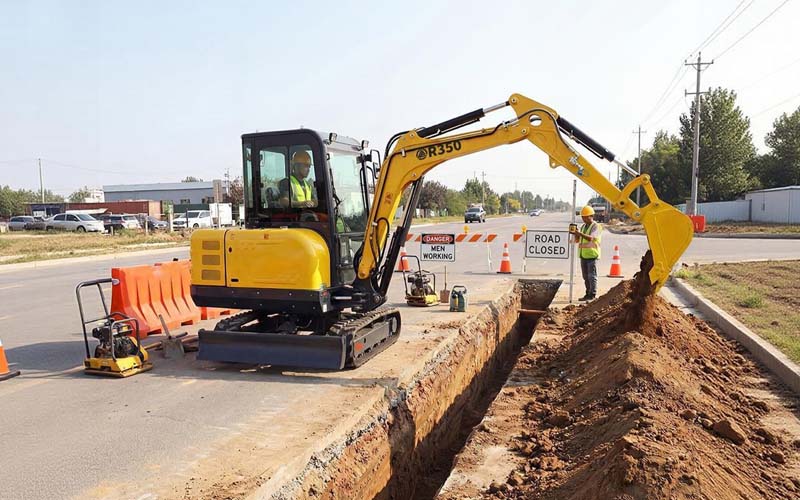
Digging Depth, Reach, and Dumping Height
Maximum digging depth describes how far the bucket can excavate below the machine’s reference level under specified conditions. Maximum reach represents the horizontal working distance, while dumping height affects the ability to load material into a vehicle or spoil pile.
These maximum measurements do not mean that the excavator produces identical digging force or lifting capacity at every position. Stability and usable capacity can change as the attachment moves farther away from the machine.
Bucket width and capacity should also match the material. A wider bucket may carry more loose soil but creates greater resistance in hard or compacted ground. Trenching, grading, clay excavation, and bulk loading may therefore require different buckets.
Engine and Hydraulic Specifications
Rated engine power indicates the power available to operate the machine, but hydraulic system design has a major influence on digging response and attachment performance.
Hydraulic flow and pressure affect cylinder movement and auxiliary attachments. Breakers, augers, and grapples may require different flow ranges, return lines, or control arrangements. Buyers should obtain written compatibility confirmation before purchasing attachments.
Engine configuration, emission requirements, and certification must be checked for the destination market. Buyers should not assume that every Rippa mini excavator has the same approval because another model carries it.
Undercarriage and Service Information
Track width and ground clearance affect traction, flotation, obstacle clearance, and machine stability. Travel speed influences movement around the site, while gradeability is only a controlled-condition reference. Actual performance changes with soil, weather, load, track condition, and operator technique.
A complete review should also cover maintenance intervals, filter availability, lubrication points, wear parts, warranty terms, and spare-parts support.
The right Rippa mini excavator is the model whose verified dimensions, digging range, hydraulic capacity, transport needs, and support package fit the buyer’s application—not simply the machine with the largest number on one line of a specification sheet.